Serving Hampton, VA & nearby
(757) 384-0572
Hampton, VA

What Hampton's 1960s-70s Housing Stock Means for Your Garage Door

Hampton homes built 1966-1992 still run original garage door hardware. Here's what the area's cold winters and housing age mean for your door and opener.

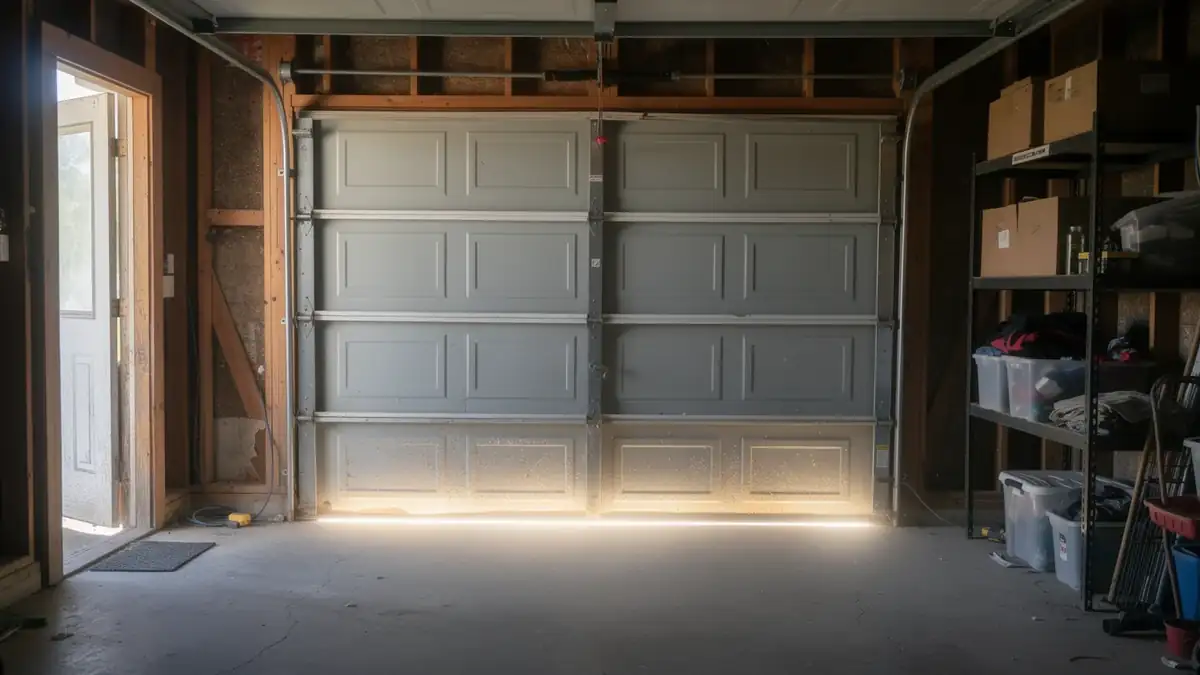
A closed gray garage door with a bright light shining underneath it.

The Situation

Most houses in this part of Hampton went up between 1966 and 1992, with the median landing around 1977. That puts a lot of the garage doors in neighborhoods like Fox Hill-Grandview on original or near-original hardware - doors, tracks, and openers sized for the building codes and materials of that era, not for what gets sold today. A door from that window is usually a single steel skin with no insulation layer, hung on a torsion spring sized for a lighter panel than a lot of homeowners have since swapped. When we get a call from a street near Langley or down toward the pattern repeats: same vintage, same wear pattern, same parts nobody keeps on the shelf anymore. This isn't a knock on the houses - they're solid builds for their age. It's just that a door bought when disco was still on the radio wasn't built with 2024 expectations for quiet operation, R-value, or smart openers. Knowing roughly when your house went up tells you more about what's likely wrong with your door than the model number ever will.

How Local Conditions Play In

Hampton sits in a cold-moderate climate band - not brutal winters, but real freeze-thaw cycling, enough humidity off the water to matter, and enough cold stretches to stiffen lubricant and shrink metal on a door that's 40-plus years old. On an original steel-skin door with no insulation, that cycling shows up as condensation on the inside face, a track that binds tight on the coldest mornings, and hardware that's corroded just enough at the hinges to bind rather than snap outright. It's not dramatic weather. It's the slow kind that a newer insulated door with sealed joints shrugs off and an older uninsulated one doesn't. If your door gets noticeably harder to lift on cold mornings and loosens up by afternoon, that's the steel contracting and the old spring tension not compensating the way it used. That's a maintenance issue on a door this age, not a mystery. Houses closer to the water side of town, toward Fort Monroe, also deal with more salt air working on exposed hardware and fasteners than houses further inland.

What to Check

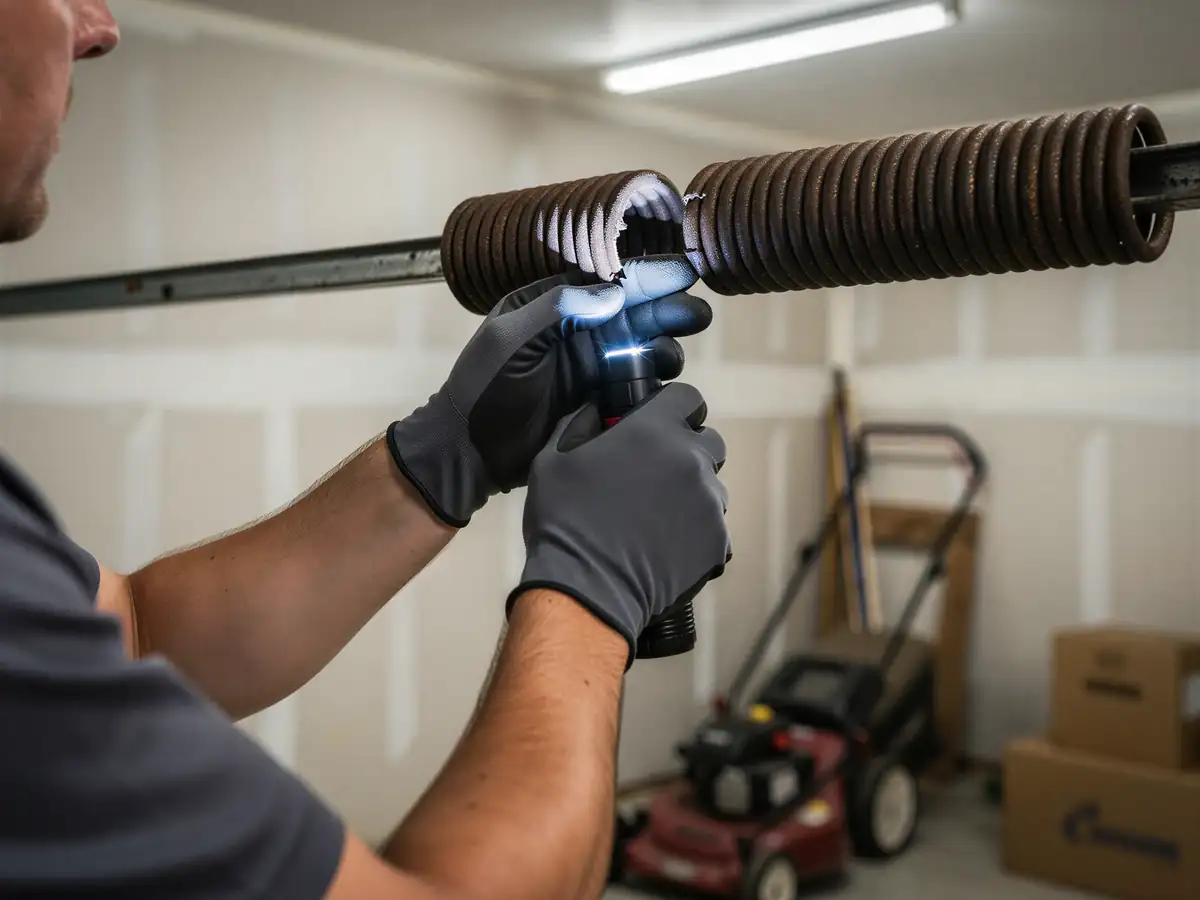
Start with the spring. On a door built in the 1966-1992 window, the torsion spring has likely never been replaced, and springs have a working life measured in cycles, not years - a 40-50 year old spring is well past due even if it hasn't failed yet. Next, check the track mounting bolts; original hardware from that era often used lag screws into framing that's shrunk slightly over the decades, so bolts that were snug in 1977 can be loose now. Look at the bottom panel for rust-through, especially on doors facing the water side of town, where salt air accelerates it. Check whether the door has any insulation at all - if you can see bare steel ribs from inside the garage, it's an original uninsulated panel, and that affects both your energy bill and how much the door fights the cold on winter mornings. Last, listen to the opener: a chain-drive unit from that era straining and grinding on every cycle is telling you the gear set is near its end, not that it needs oil.

When It Stops Being a DIY Job

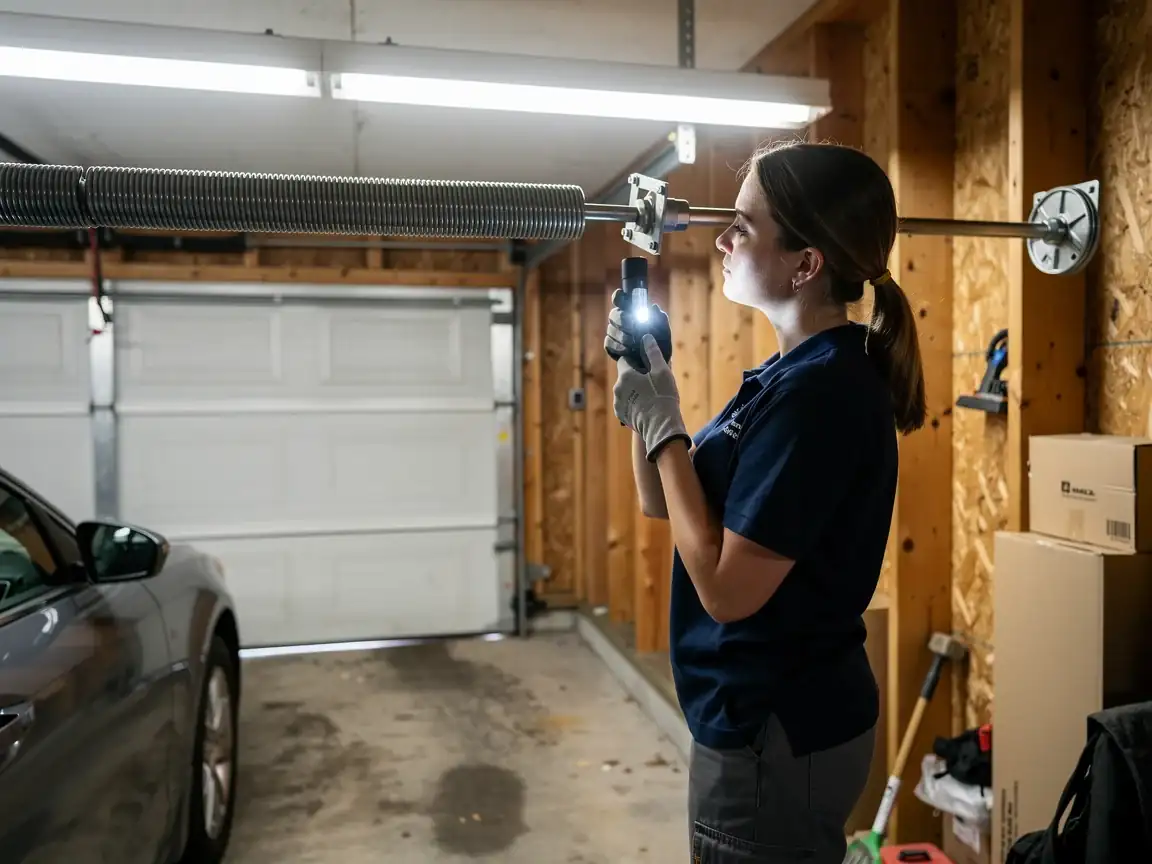
Tightening a track bolt or spraying the rollers is fine to do yourself. A torsion spring is not - on a door this age, the spring is under significant stored tension, and a cable or spring failure on a house from the 1966-1992 build window has already outlived its design life once; we don't recommend touching it without the right bars and clamps. The honest answer on a lot of these original doors: once the spring, the opener, and the insulation are all original from the same build year, patching one piece just means the next piece fails in a season or two. At that point replacement costs less over five years than a string of repair calls, even though nobody likes hearing that about a door that still physically closes. If your door is sticking, binding, or making new noise and it predates 1992, that's the point to call someone out rather than keep adjusting it yourself.

How it works

From “it’s stuck” to “it’s fixed”

A man uses a smartphone to open a gray garage door on a blue house.

Tell us what’s wrong

Describe the symptom - won’t open, loud bang, opener runs but the door won’t move.

A technician shines a flashlight on a garage door torsion spring.

On-site diagnosis

A technician tests the door under power and by hand and finds what actually failed.

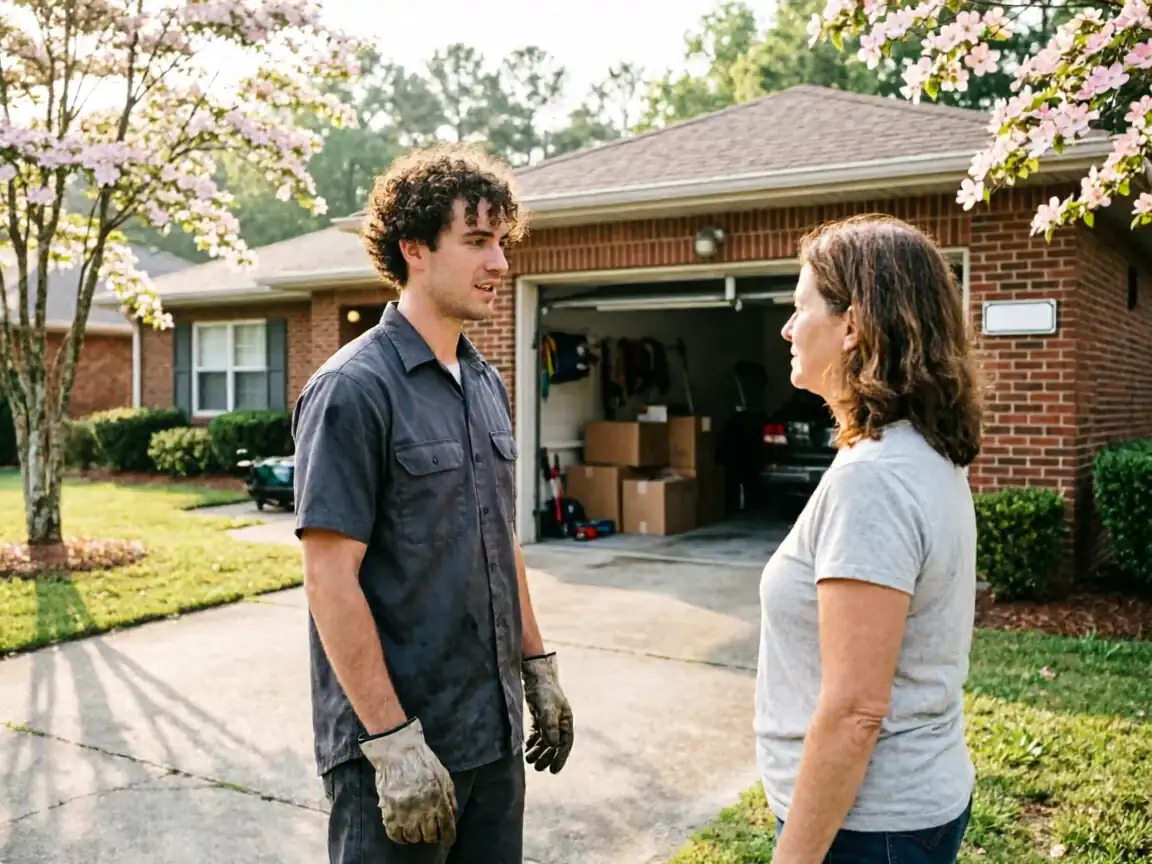
A technician in work gloves talks to a woman in front of a brick house.

Clear, up-front plan

You get the fix that’s needed and what drives the cost - before any work starts.

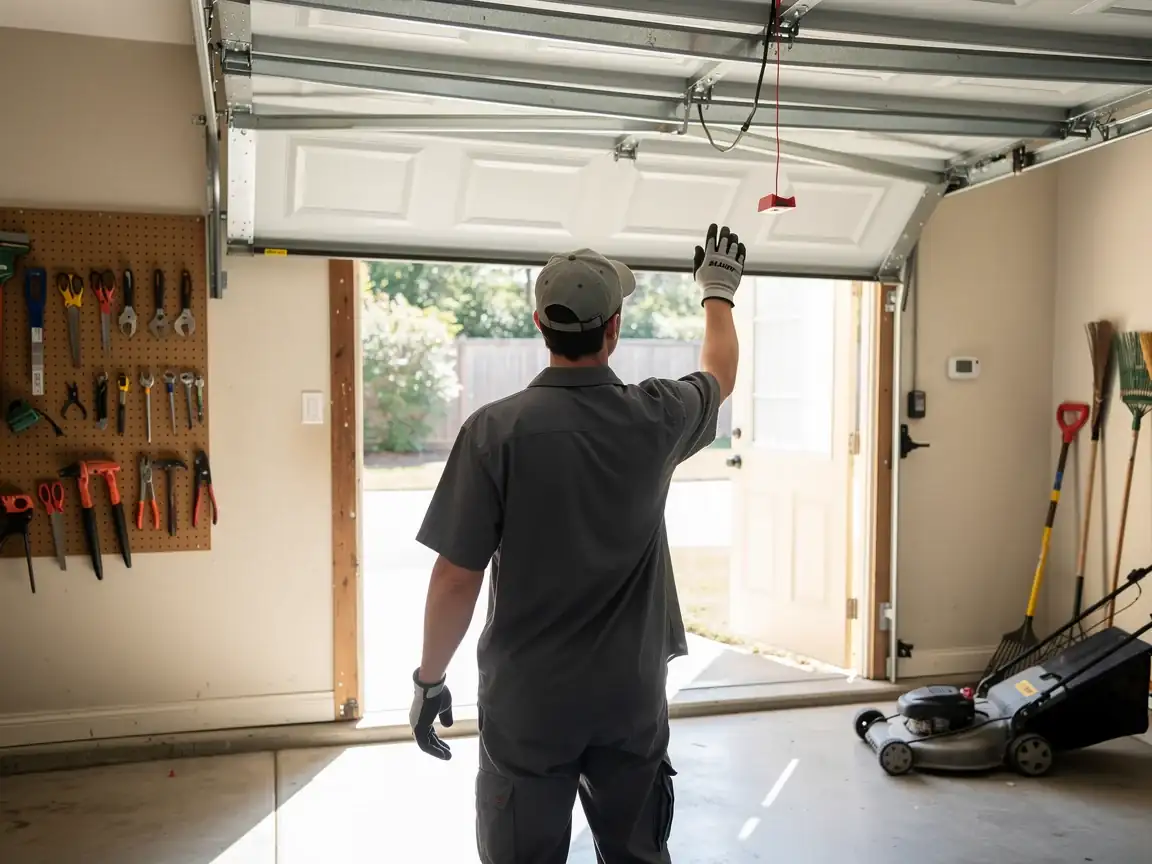
A technician in a gray uniform and gloves is looking at an open garage door.

Repaired & tested

The repair is done, the door is set true and tested, and the work area left clean.

Not sure which repair your door needs in Hampton, VA? Describe what it’s doing - every job starts with a diagnosis.

How we work

What to expect

A straight, honest approach on every Hampton job - diagnosis first, the right parts, and clean work.

01

Diagnosis first

Every visit starts by finding what actually failed - not a pre-written parts list.

02

The right part for the door

Springs and openers matched to the door’s weight and age, so the fix holds up.

03

Straight answers

When a repair makes more sense than a replacement - or the reverse - you hear it plainly.

04

Clean, careful work

Tension released safely, hardware set true, the door tested under power before we leave.

Questions

Frequently asked

Straight answers about garage door repair in Hampton. Still unsure? Ask us directly.

Why does my garage door stick in cold weather but not in summer?

On an older uninsulated steel door, the metal contracts in the cold and the track alignment that was fine in warm weather tightens up. Combined with old lubricant thickening and hardware that's lost a little tension over the decades, that's usually enough to make a door bind on the coldest mornings and loosen up by afternoon.

Is my garage door original to the house if it was built in the 1970s?

It's common in this area, where a lot of houses date to the 1966-1992 window with a median around 1977. Not every door is original - plenty have been swapped - but if yours has a single steel skin with no insulation and visible bare ribs inside, that's a strong sign it's the original or close to it.

Should I replace the spring myself to save money?

We don't recommend it. A torsion spring under tension can cause serious injury if it releases wrong, and on a door this old the spring has usually outlived its rated cycle count anyway. This is one job worth paying someone to do with the right bars and clamps rather than doing yourself.

Ready to get your garage door sorted?

Tell us what it’s doing and where you are in Hampton - we’ll take it from there.

Request a QuoteCall