How Long It Takes
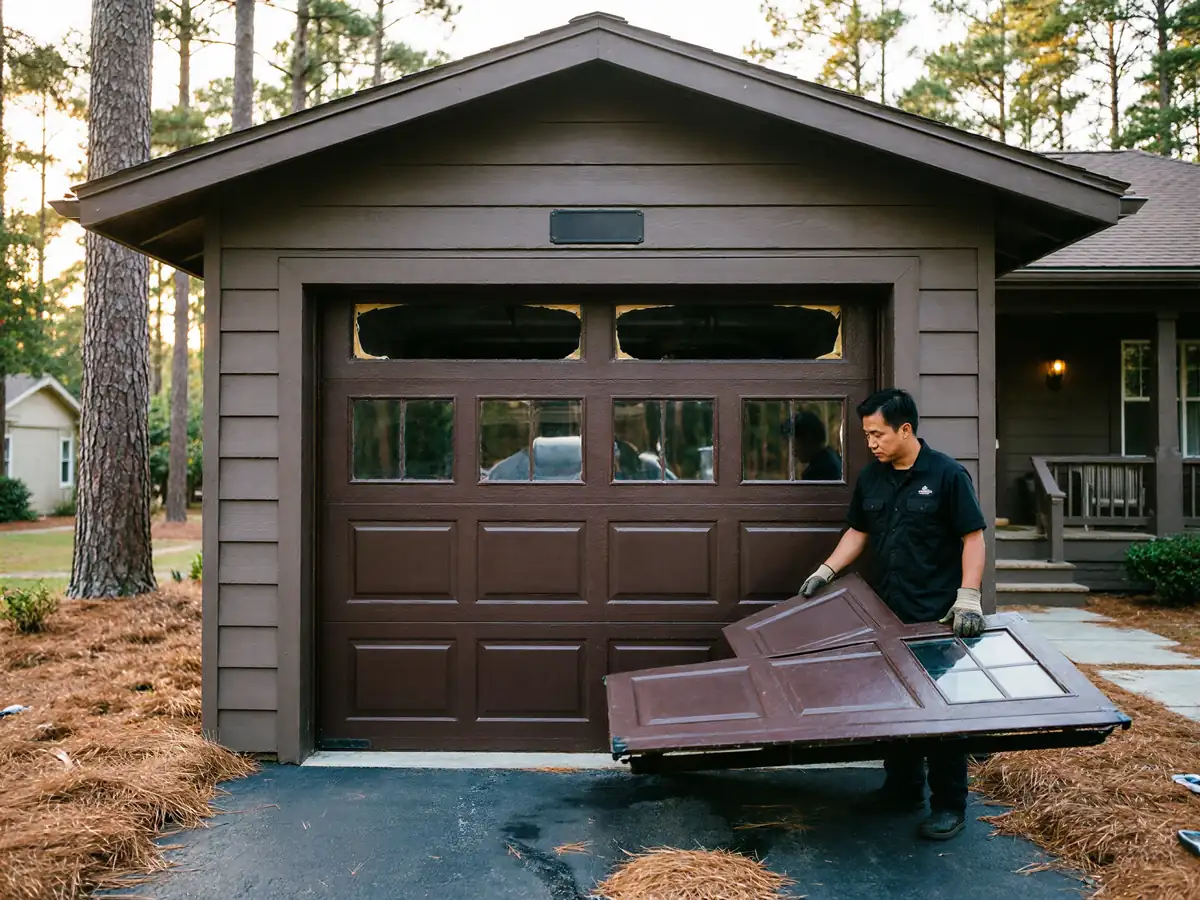
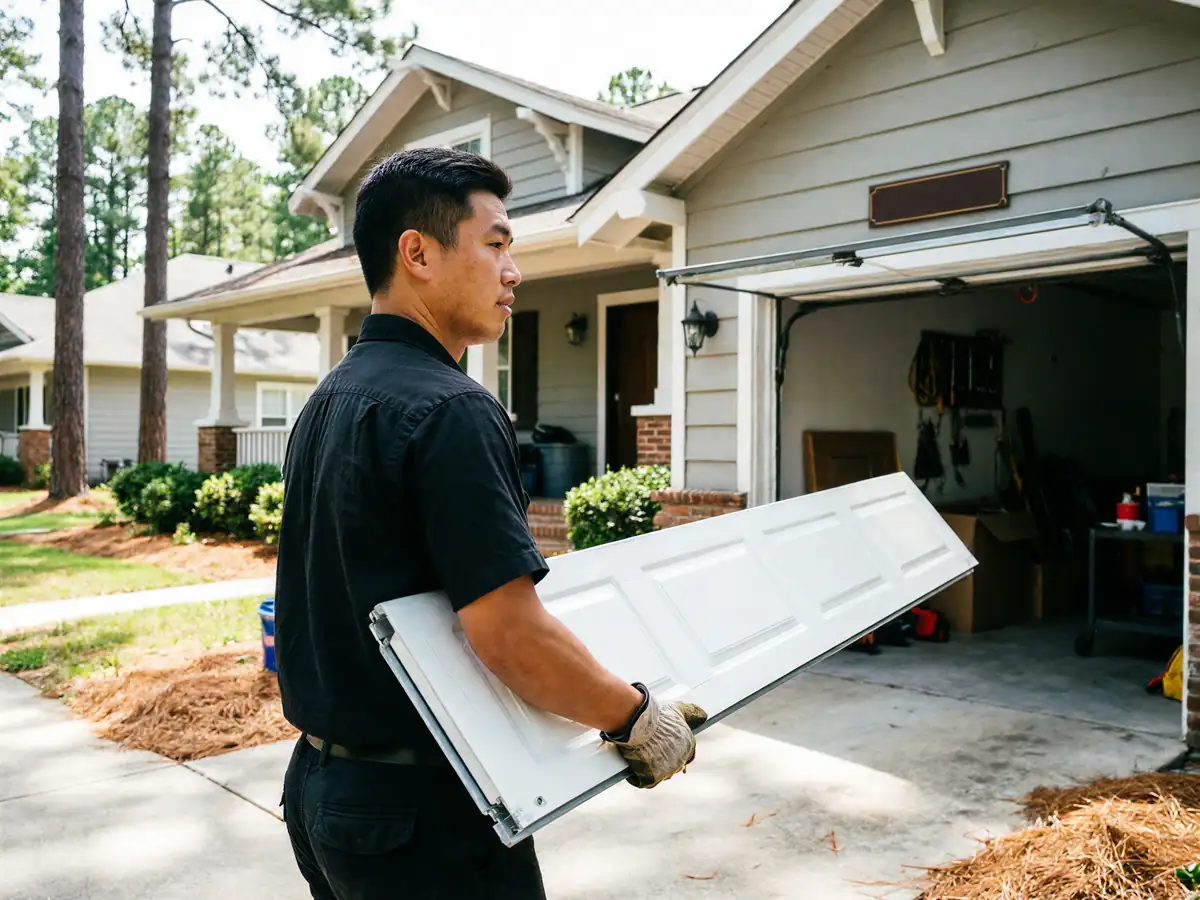
A single-panel swap on a sectional door is usually the fastest repair we do
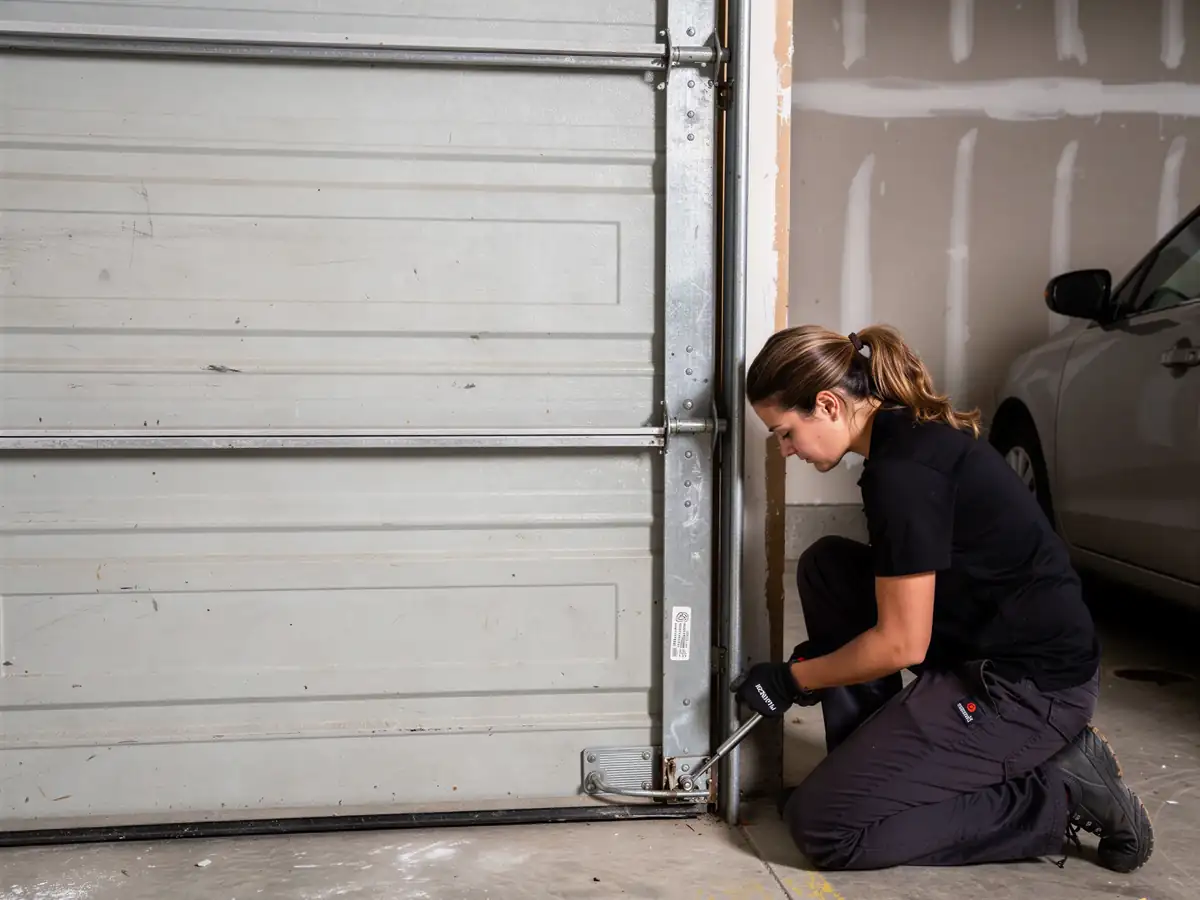
But it depends on getting the right panel. Most houses across Hampton's older sections were built between 1966 and 1992, with a lot of that stock going up in the 1960s and 70s. That means the door on the house is often an older sectional model, and the manufacturer may no longer make that exact panel profile or color. When we can match the panel from current stock, the swap itself is a same-visit job - unbolt the hinges, pull the old section, set the new one, re-hang. When the panel has to be special-ordered because the door is an older or discontinued line, the wait is on the supplier, not on the install. We'll tell you up front which situation you're in before we start, because tearing into a door we can't finish the same day doesn't help anyone.
Double doors with a damaged bottom or second-from-bottom panel take a little longer
Since those panels carry more of the door's weight and the track alignment has to be checked again after the swap. We won't rush that part - a panel that looks fine but sits a quarter-inch out of true will bind the rollers within a season.
The Cost of This Job
Panel replacement cost comes down almost entirely to whether we can source a matching panel off the shelf or have to order one. A standard steel panel in a common size, matched to a door that's still in production, is the cheaper and faster path. A panel for an older door - the kind common on houses built in the 1960s through the 1980s across this area - often has to come from a specialty supplier, and that adds both cost and lead time. We don't carry pricing on this page because it depends on the door's age, brand, and how many panels are damaged; we quote it after we see the door and pull the model number.
One honest note: if more than two panels on a double door are dented, cracked, or rusted through, or if the door is already past 20 years old, we'll usually tell you straight that full replacement costs less over time than chasing discontinued panels one at a time. We'd rather tell you that than sell you a patch job that needs another patch job in two years.
Why This Fails Locally
Hampton's housing stock skews older - a lot of it from the 1960s and 70s, with median construction around 1977 across the service area. Doors from that era are steel, often single-layer with no insulation core, and they were built before manufacturers reinforced panel seams the way current doors do. Over fifty-plus years, those seams flex with every open-and-close cycle, and the bottom panels take the brunt of it from lawn equipment, car bumpers, and general contact at ground level.
The climate here adds to it. Hampton sits in a cold-moderate band with real humidity swings between seasons, and uninsulated steel panels from that era expand and contract more than insulated doors do. That cycling works dents into stress cracks faster than it would on a newer, better-built panel. We see this pattern across the same five or so older neighborhoods repeatedly - it's not random damage, it's the panel design meeting fifty years of weather and use. Newer doors in this area, built to current code, don't show the same failure rate.
The Symptom
The usual call is a dent or a crack in one panel, almost always the bottom one or the one above it
While the rest of the door still opens and closes fine. Sometimes there's a visible bow in the panel that catches light differently than the rest of the door. Sometimes it's a hole - rust that ate through from the inside after years of moisture sitting in the panel seam.
If the door is still opening and closing smoothly and the track isn't bent
That's usually a sign the damage is cosmetic and structural at once - the panel itself failed, but the hardware is fine. That's the case where a panel swap makes sense instead of a full door replacement. If the door is also sticking, scraping the track, or the opener is straining, that's a different problem, and panel replacement alone won't fix it.