Serving Hampton, VA & nearby
(757) 384-0572
Hampton, VA

When a Spring Goes in Cold Weather: A Hampton Homeowner's Guide

Hampton homes built between 1966 and 1992 carry original hardware that struggles when temperatures drop. Here's what to check before you call a tech.

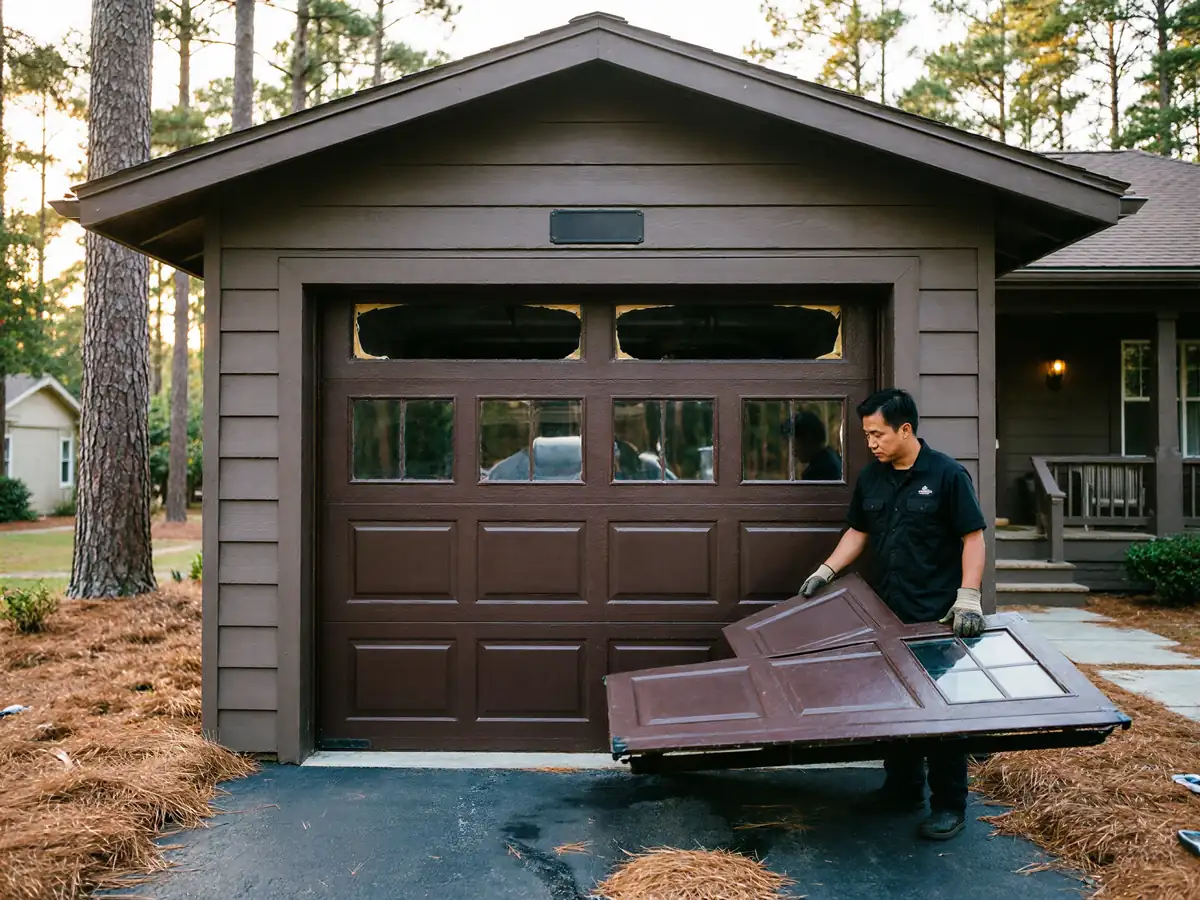
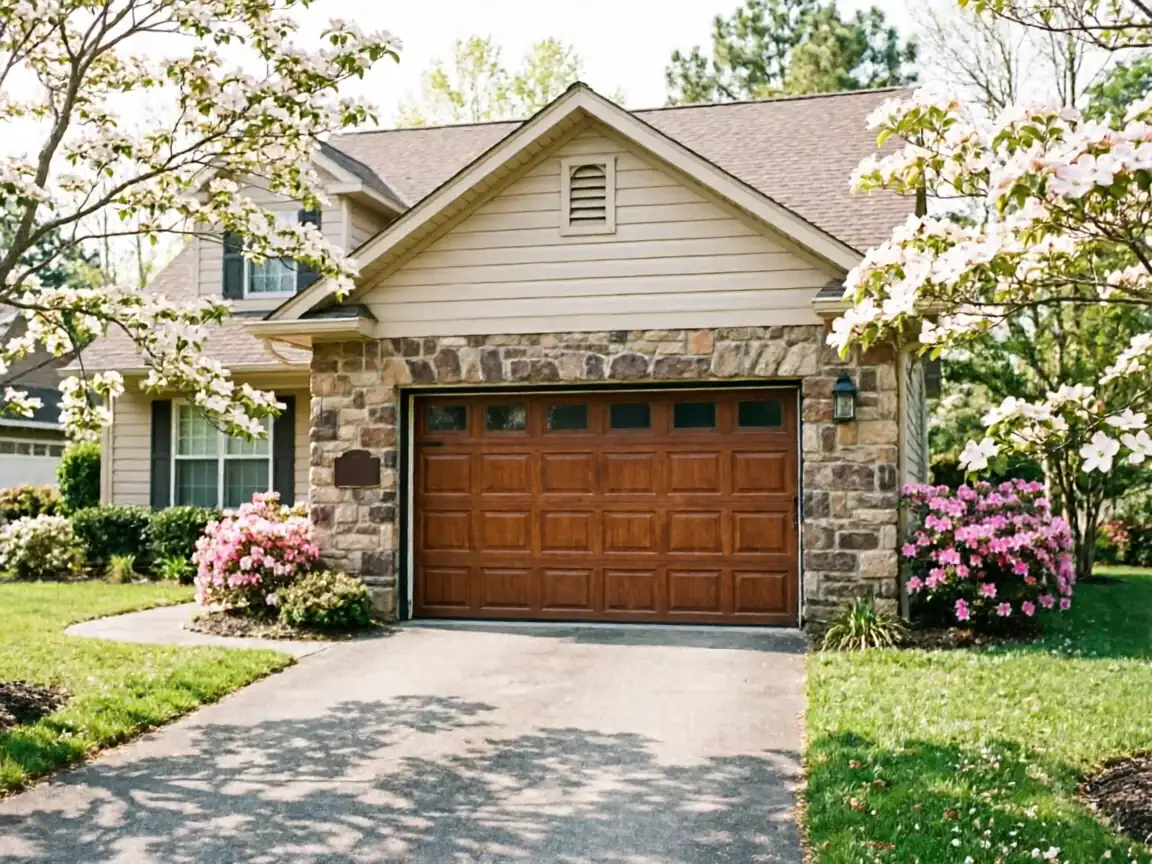
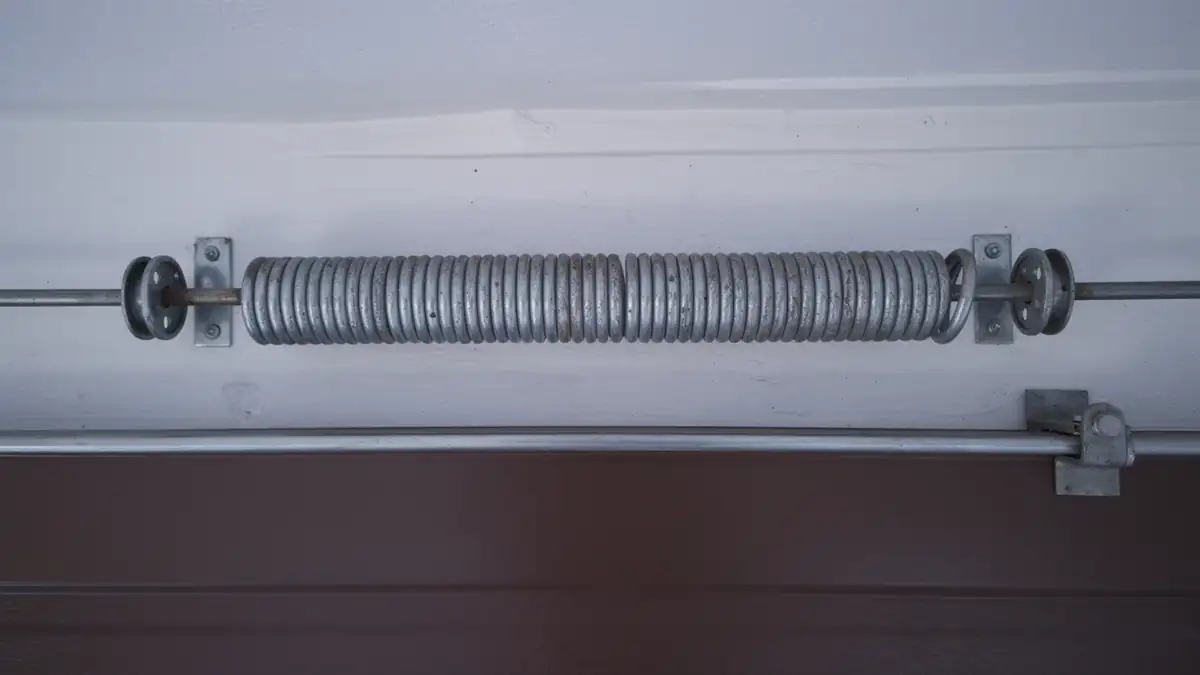
A garage door torsion spring is mounted above a brown garage door.

The Situation

  1. Most houses in Hampton went up between 1966 and 1992

    With the median build year sitting around 1977. That matters more than people think when a torsion spring snaps on a cold morning. A spring installed when the house was built, or replaced once sometime in the 80s or 90s, has been cycling through decades of humid Tidewater summers and the occasional hard freeze. Steel fatigues faster with that kind of swing. You don't get a warning shot most of the time - the door just won't go up, or it drops fast on the way down because one side let go and the other is still holding tension.

  2. Across the named areas of Hampton, the housing stock is heavily 1960s-70s

    Which means a lot of these doors are still running the torsion hardware that came with the house, or a direct swap of the same gauge spring decades later. Nobody's upgraded the wind load rating or the spring cycle count because nobody had a reason to until the door stopped working. A cold-weather break is usually the reason.

How Local Conditions Play In

Hampton sits in a cold-moderate climate band - not the deep freezes you get further inland, but enough cold snaps each winter to matter. Steel contracts when it's cold, and a torsion spring that's already near the end of its wind cycle count is more likely to let go on a 28-degree morning than a 68-degree afternoon. The metal is less forgiving, and any corrosion sitting on the coils from a humid Hampton summer becomes a stress point once the temperature drops.

This is a bigger deal here than it sounds, because so much of the housing stock in Hampton is from the 1966-1992 window. A spring that's 30 or 40 years old has already been through hundreds of cold-to-warm cycles. Add one more hard cold front and that's often the cycle it doesn't survive. If your house is in one of the older sections near chances are good the hardware predates any of the last few owners.

What to Check

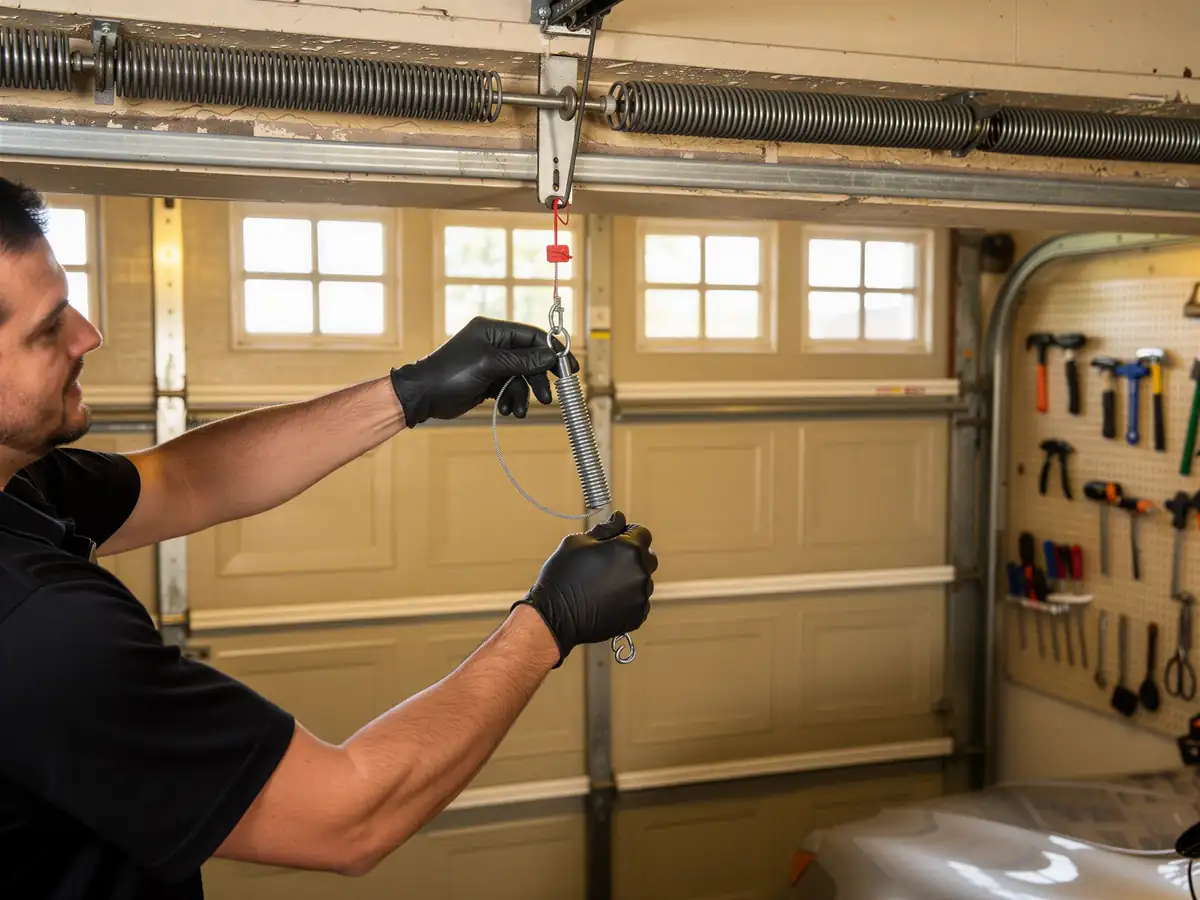
Before you touch anything, look at the spring itself. A torsion spring that's broken will usually show a visible gap in the coil, and the door will feel heavier than normal or refuse to budge past a few inches. Don't try to force it. On a door with two springs, one can fail while the other holds - the door looks like it's working but is actually unbalanced, and the remaining spring is now carrying double the load.

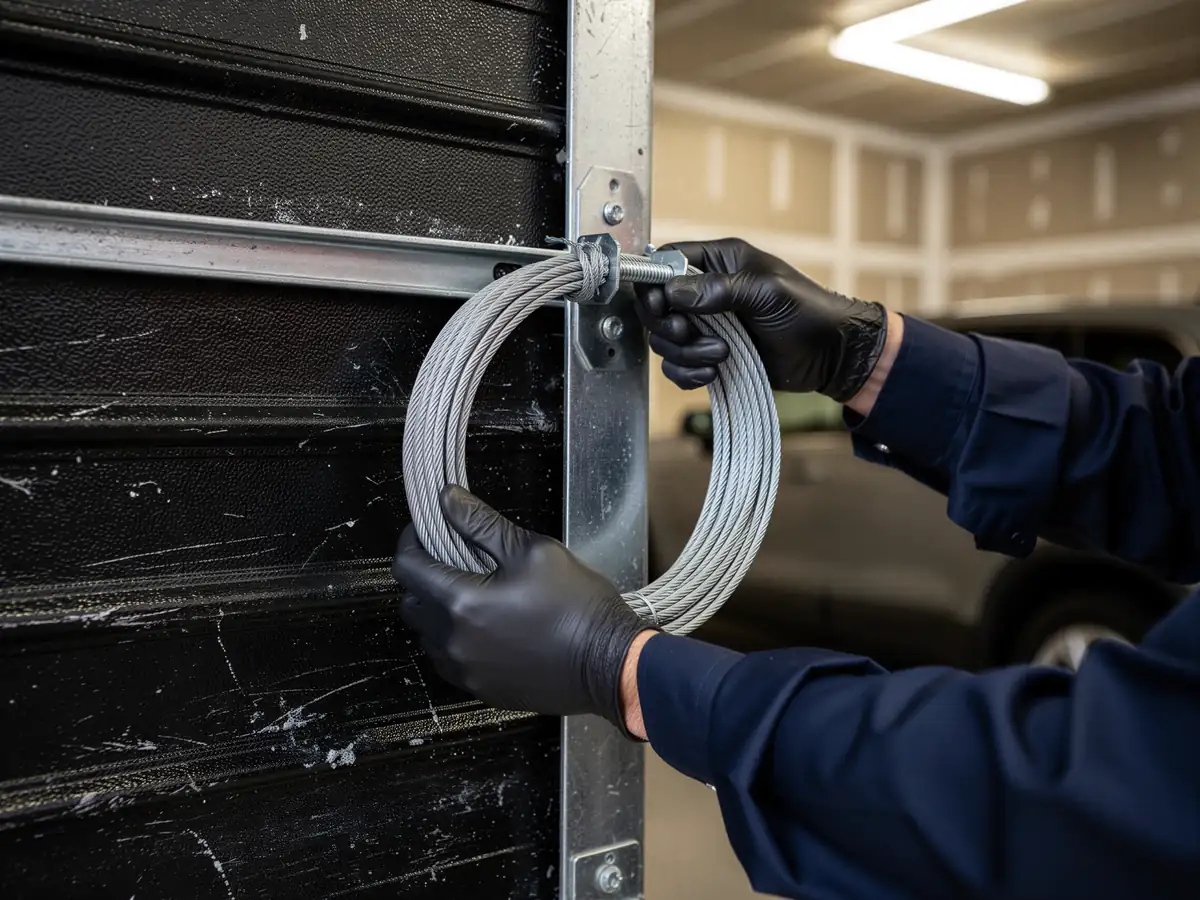
Check the cables next. Cold weather makes cable fraying easier to spot because the strands sit stiffer and catch light differently. If you see a bent track, a cable off its drum, or a bottom bracket pulled loose, stop. That's not a tighten-a-bolt fix. Also check the date stamped on the spring if it's visible - older coil-wound springs from houses built in the 1970s and 80s are a different wind type than what gets installed today, and matching the wrong spring to the wrong drum is how people get hurt.
When It Stops Being a DIY Job

A broken torsion spring is not a DIY repair. The spring is under enough tension to break bones or worse, and winding it correctly takes the right bars and the right wind count for that door's weight - which, on a lot of Hampton's original 1970s-era doors, is heavier than anything sold today because of the materials used back then. If the door has two springs and only one broke, don't run the door on the other one

How it works

From “it’s stuck” to “it’s fixed”

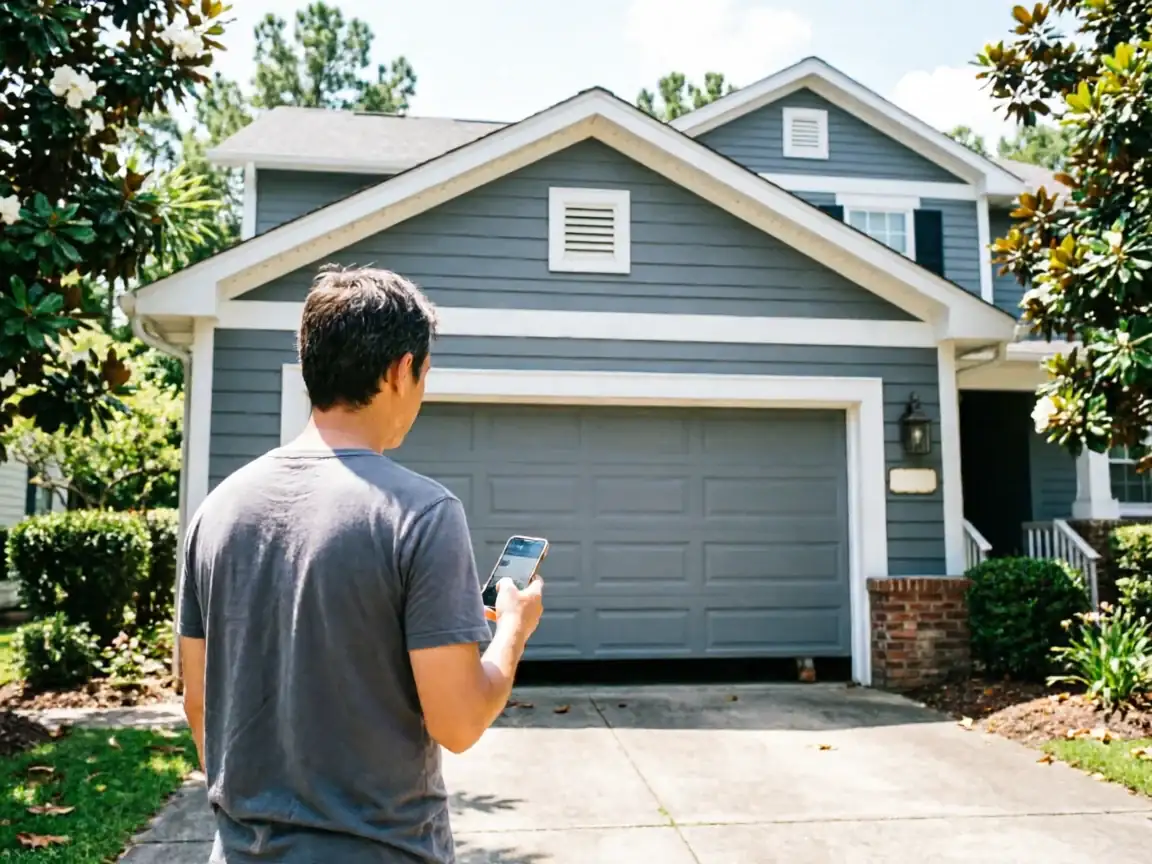
A man uses a smartphone to open a gray garage door on a blue house.

Tell us what’s wrong

Describe the symptom - won’t open, loud bang, opener runs but the door won’t move.

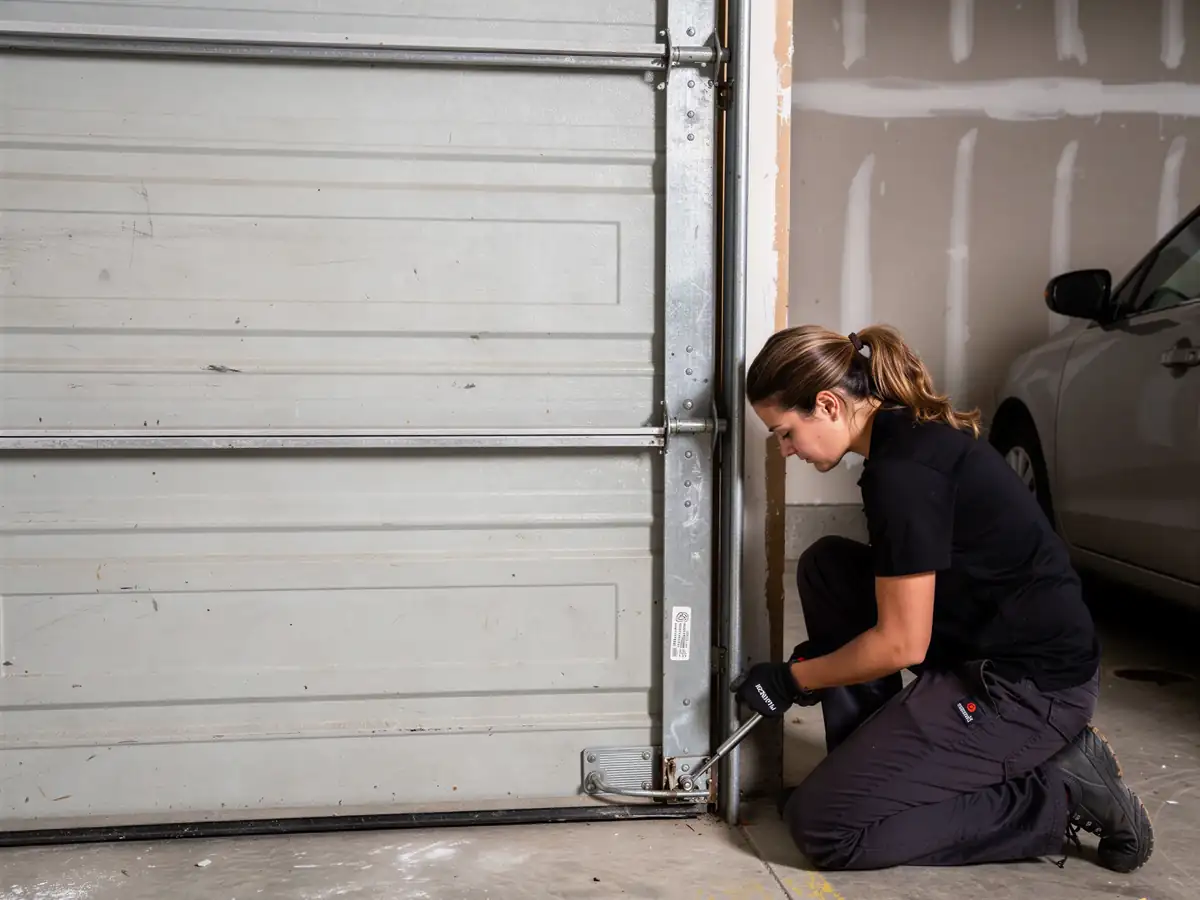
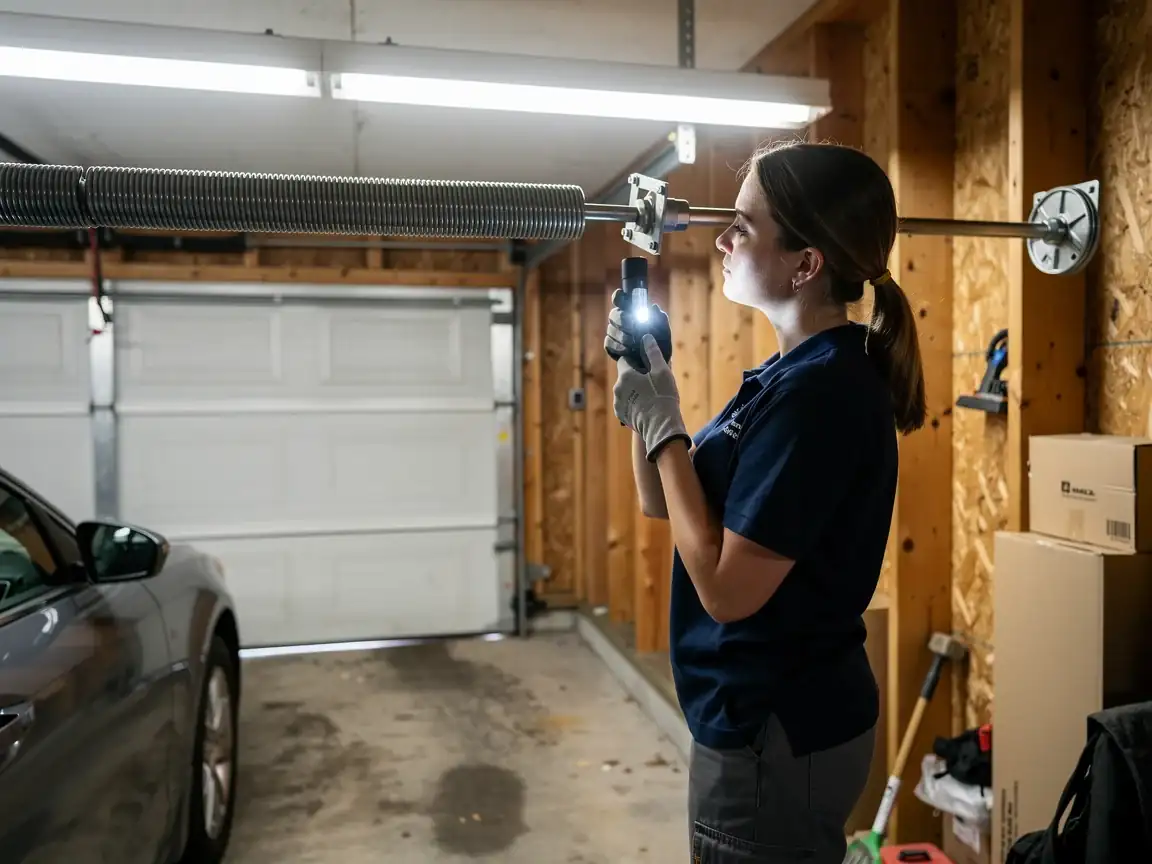
A technician shines a flashlight on a garage door torsion spring.

On-site diagnosis

A technician tests the door under power and by hand and finds what actually failed.

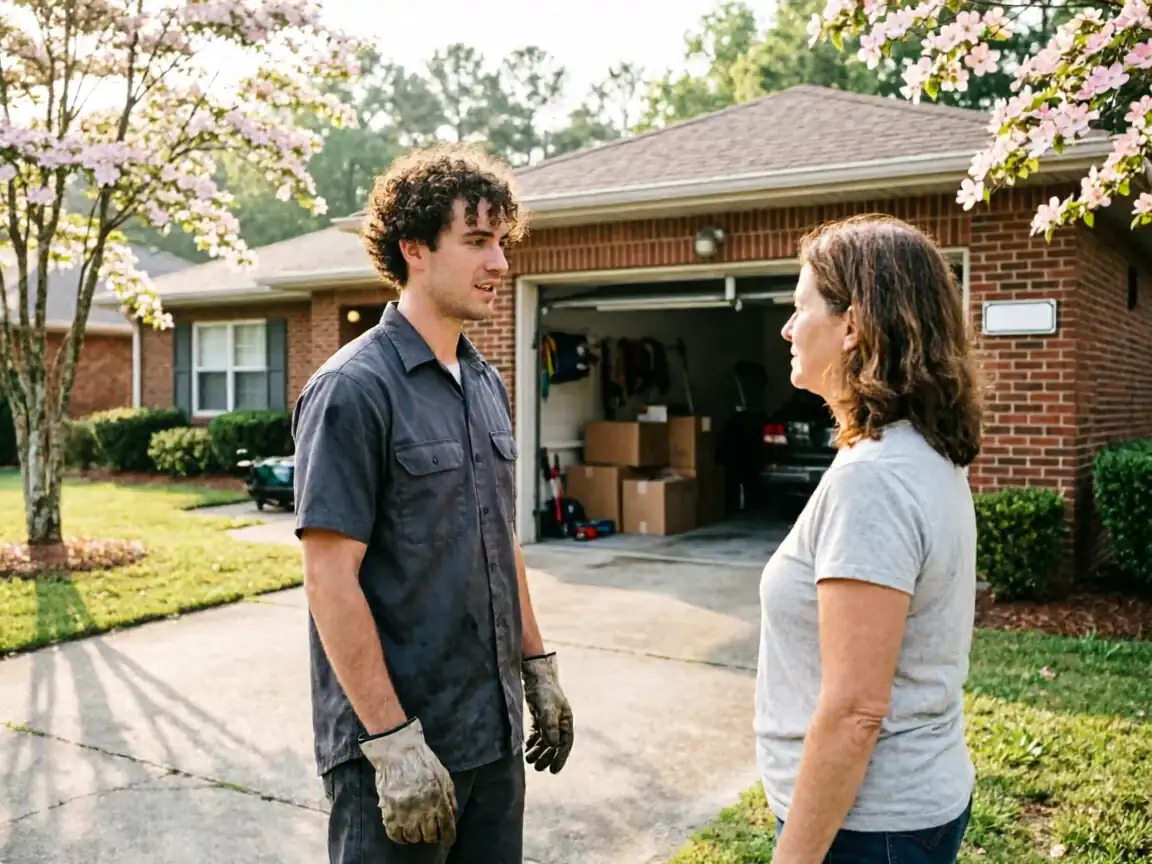
A technician in work gloves talks to a woman in front of a brick house.

Clear, up-front plan

You get the fix that’s needed and what drives the cost - before any work starts.

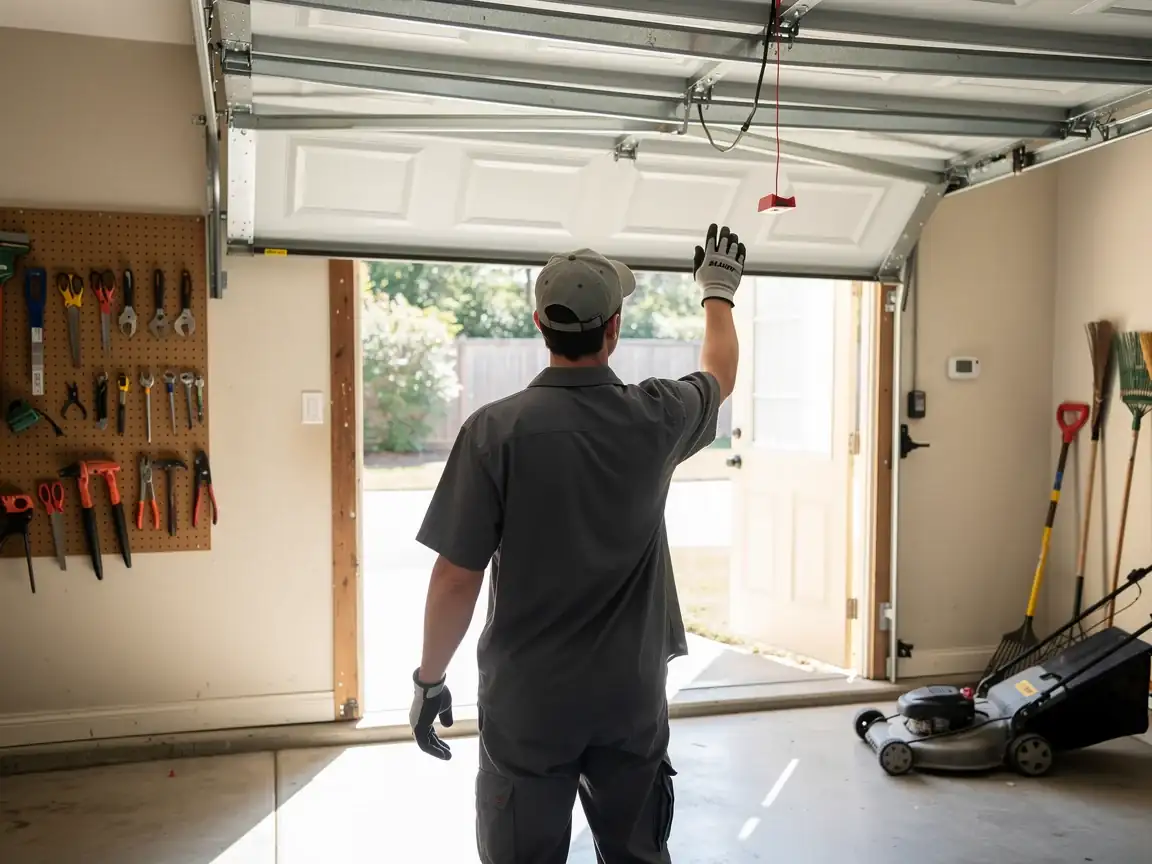
A technician in a gray uniform and gloves is looking at an open garage door.

Repaired & tested

The repair is done, the door is set true and tested, and the work area left clean.

Not sure which repair your door needs in Hampton, VA? Describe what it’s doing - every job starts with a diagnosis.

How we work

What to expect

A straight, honest approach on every Hampton job - diagnosis first, the right parts, and clean work.

01

Diagnosis first

Every visit starts by finding what actually failed - not a pre-written parts list.

02

The right part for the door

Springs and openers matched to the door’s weight and age, so the fix holds up.

03

Straight answers

When a repair makes more sense than a replacement - or the reverse - you hear it plainly.

04

Clean, careful work

Tension released safely, hardware set true, the door tested under power before we leave.

Questions

Frequently asked

Straight answers about garage door repair in Hampton. Still unsure? Ask us directly.

Why did my spring break in cold weather and not before?

Steel gets less flexible as it cools, and a spring that's already near the end of its wind cycle count is more likely to snap under that added stress. In Hampton's cold-moderate climate, a hard cold front is often the final push on hardware that's already decades old from houses built in the 1966-1992 window.

Is my old torsion spring the same type sold today?

Not necessarily. Houses built in the 1970s and 80s, which make up a lot of Hampton's housing stock, often used different wind counts and gauges than current springs. We don't guess on this - matching the wrong spring to a drum is a real safety risk, so we check the stamp and the door weight before touching anything.

Can I replace one spring and leave the other?

No. If one spring on a two-spring door breaks, the other has already been carrying double the tension it was built for and is close behind. We always replace both, even though it costs more up front, because running on a single aged spring is how the second failure happens, usually at a worse time.

Ready to get your garage door sorted?

Tell us what it’s doing and where you are in Hampton - we’ll take it from there.

Request a QuoteCall