How Long It Takes
Most opener calls in Hampton get diagnosed and fixed in one visit
Because the failures repeat themselves across the housing stock here. A huge share of houses in this service area went up between 1966 and 1992, median year 1977, and that means a huge share of openers are second or third-generation replacements on original wiring and original header framing. The diagnosis is usually fast: dead capacitor, worn drive gear, a logic board that's taken one too many power blips, or a safety sensor knocked out of alignment by somebody's bike leaning on it.
What slows a job down isn't the diagnosis, it's the part
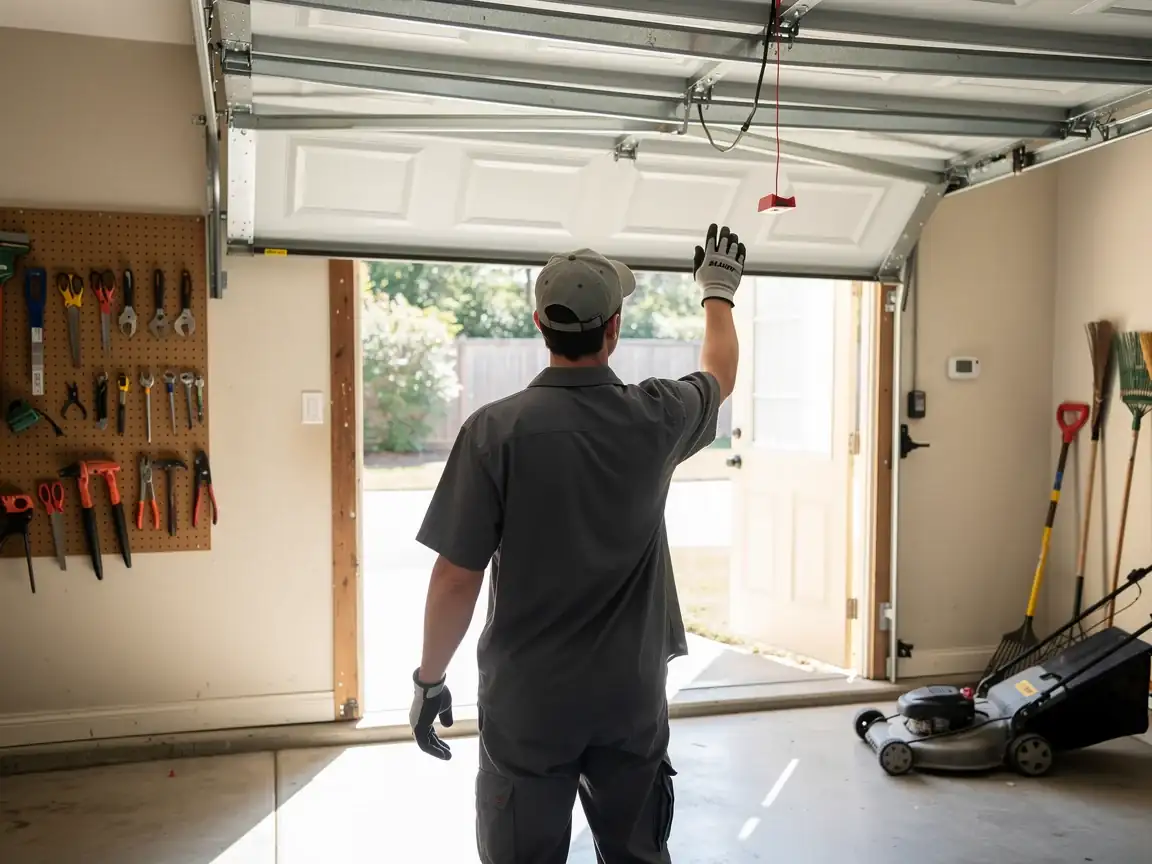
If your opener is an older chain-drive unit that's been discontinued, we may not have the exact board or gear kit on the truck, and that can push a repair to a second visit while we source it. We tell you that up front instead of promising a same-day fix we can't back. Straightforward fixes - sensor alignment, travel limit reset, remote reprogramming, logic board swap on a common model - those we close out in one trip, same day in most cases.
If the motor itself has burned out
Or the unit predates safety-reversal sensors required on anything installed after the mid-1990s, replacement is usually the faster and safer call than repair, and we'll say so rather than stretch a repair past where it makes sense.
The Cost of This Job
We're not going to put a number here that doesn't hold up house to house, because opener repair cost swings on what actually failed - a $20 sensor bracket is not a $200 logic board, and neither is a full motor replacement. What we can tell you is what drives the range in this service area: age and brand of the opener, whether the chain or belt drive is original to a 1970s-80s build or a later swap, and whether the circuit board is still manufactured or has to be sourced as a compatible replacement.
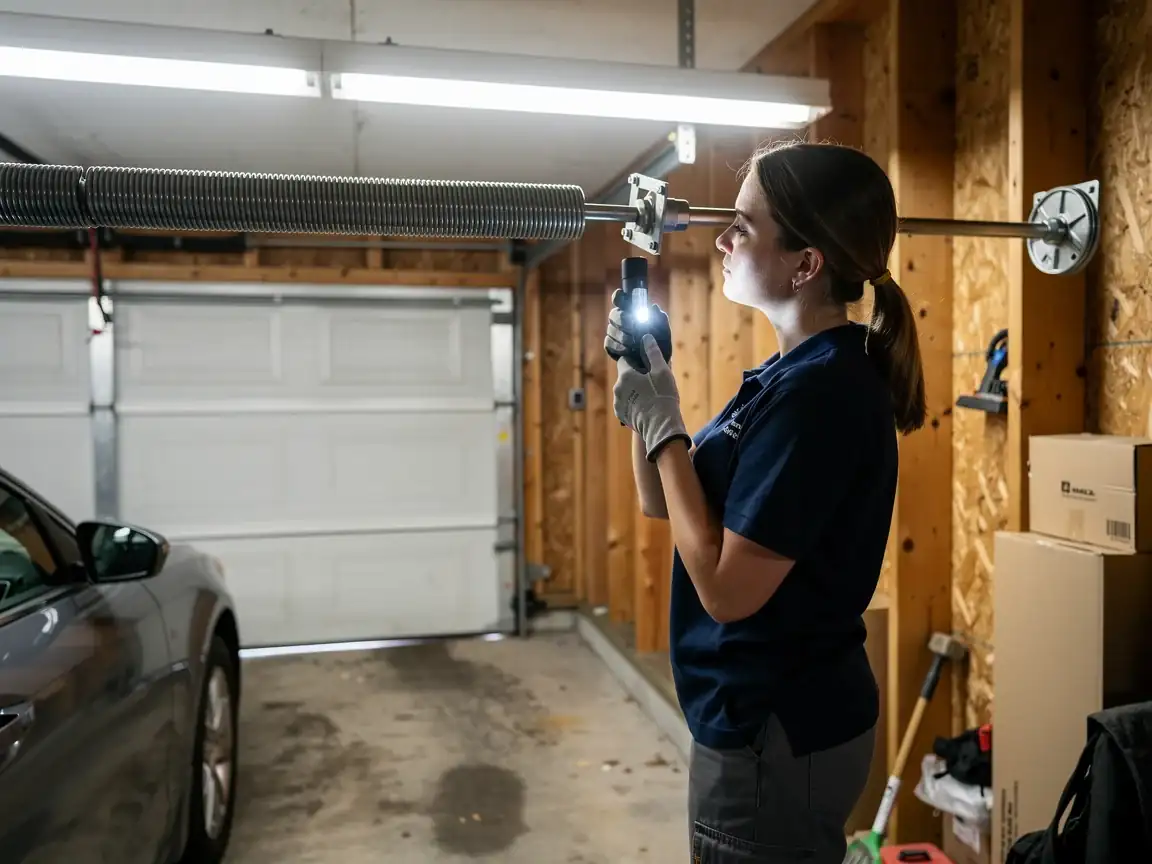
Across the 52,311 households and roughly 23,601 owner-occupied houses in this service area, the opener age split is wide - some houses still run the unit installed when the garage was finished, others have had three openers since. We quote the job after we've opened the housing and looked at the motor, gears, and board, not over the phone off a guess. That's the only way the number means anything.
One honest limitation: if your opener is old enough that a working replacement board no longer exists for that model, we'll tell you plainly that repair isn't the economical path, even if it means a shorter invoice for us.
Why This Fails Locally
Hampton's coastal, moderately cold climate band puts openers through a specific kind of stress that inland houses don't see as much: humidity swings that work into capacitors and relay contacts, and enough winter cold to make old grease in the gear housing stiffen up and strain the motor on cold starts. That combination shortens the working life of the electronics faster than it shortens the life of the door itself.
Layer that onto the housing stock - mostly 1960s and 70s construction across the five main areas this company covers - and you get garages that were built with a single switched outlet near the header, often on a circuit shared with exterior lighting. Openers on those circuits see more voltage fluctuation than a dedicated line would allow, and that fluctuation is a leading cause of fried logic boards on units that are otherwise mechanically fine.
We see the same failure pattern across the service area regardless of which named area the house sits in: original or near-original opener, shared circuit, coastal humidity, cold-start strain on old grease. The fix isn't exotic - surge protection, a gear and motor service, sometimes a dedicated circuit - but it only gets diagnosed correctly if someone looks at the wiring, not just the door.
The Symptom
The call usually starts one of a few ways
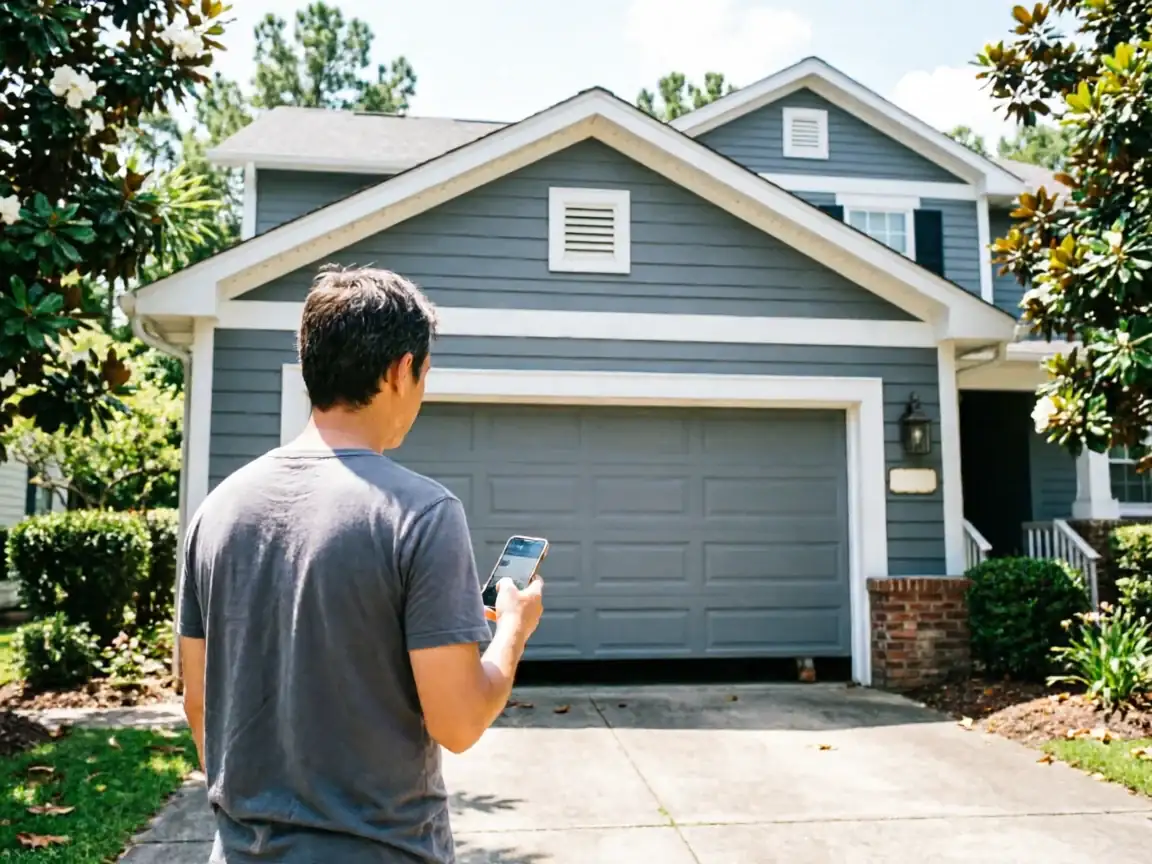
The door won't go up at all and the motor just hums, the door goes up partway and reverses, the remote works from six feet but not from the driveway, or the opener runs but the door doesn't move because the drive gear has stripped.
A humming motor that doesn't lift is almost always a stuck or worn drive gear
Or a capacitor that's lost its charge - common on openers that have sat through a decade or two of Hampton's humidity. A door that reverses partway up is often a misaligned safety sensor, sometimes just dust or a cobweb across the beam, sometimes a bracket that's been bumped loose. Weak remote range usually traces back to a worn antenna wire inside the motor housing rather than the remote itself, and swapping batteries won't fix it.
If your opener clicks but does nothing
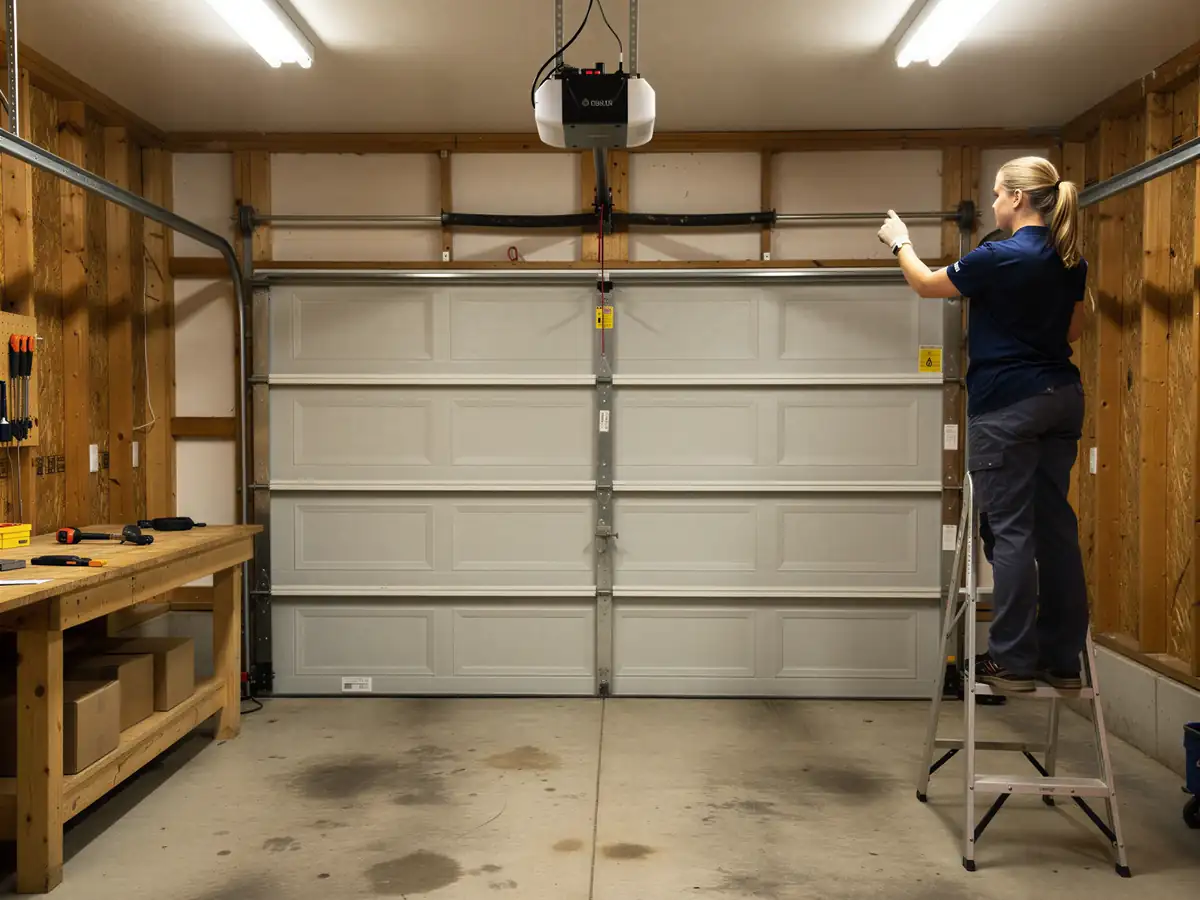
Or runs loud and slow compared to how it used to sound, that's wear in the gear and motor assembly, not something that gets better on its own. The symptom tells us where to start, but on a house with 1970s original garage framing and a shared circuit, we check the wiring and breaker load before we touch the opener itself - skipping that step is how a repair gets redone in six months.