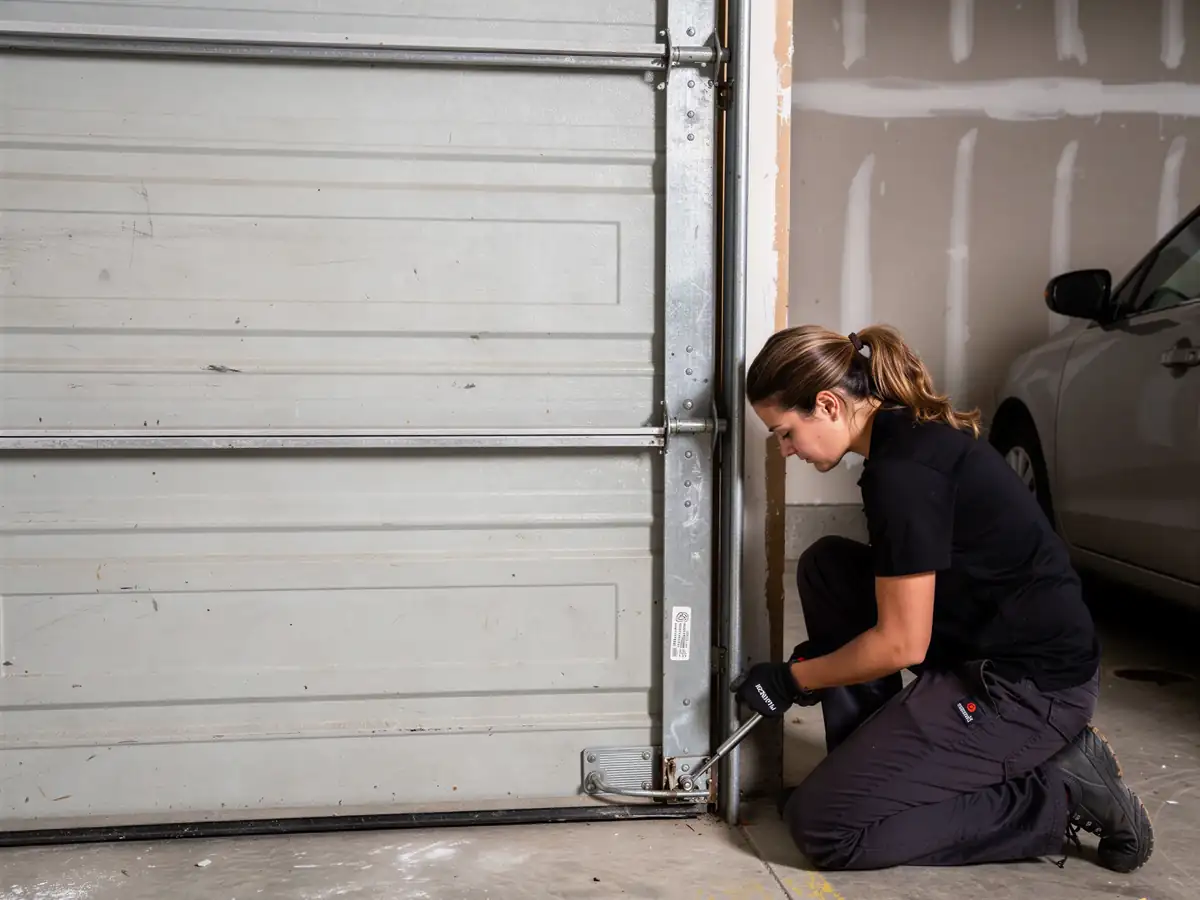
The Symptom
Smithfield is a small town by the numbers we work from
About 3,453 households, nowhere near the volume of calls that come out of the bigger parts of the service area. That matters for how a repair call here plays out: fewer doors means fewer techs who've actually been inside a Smithfield garage lately, and it means the fault patterns are a little more predictable because so many of the houses went up around the same time.
- 3,453 households
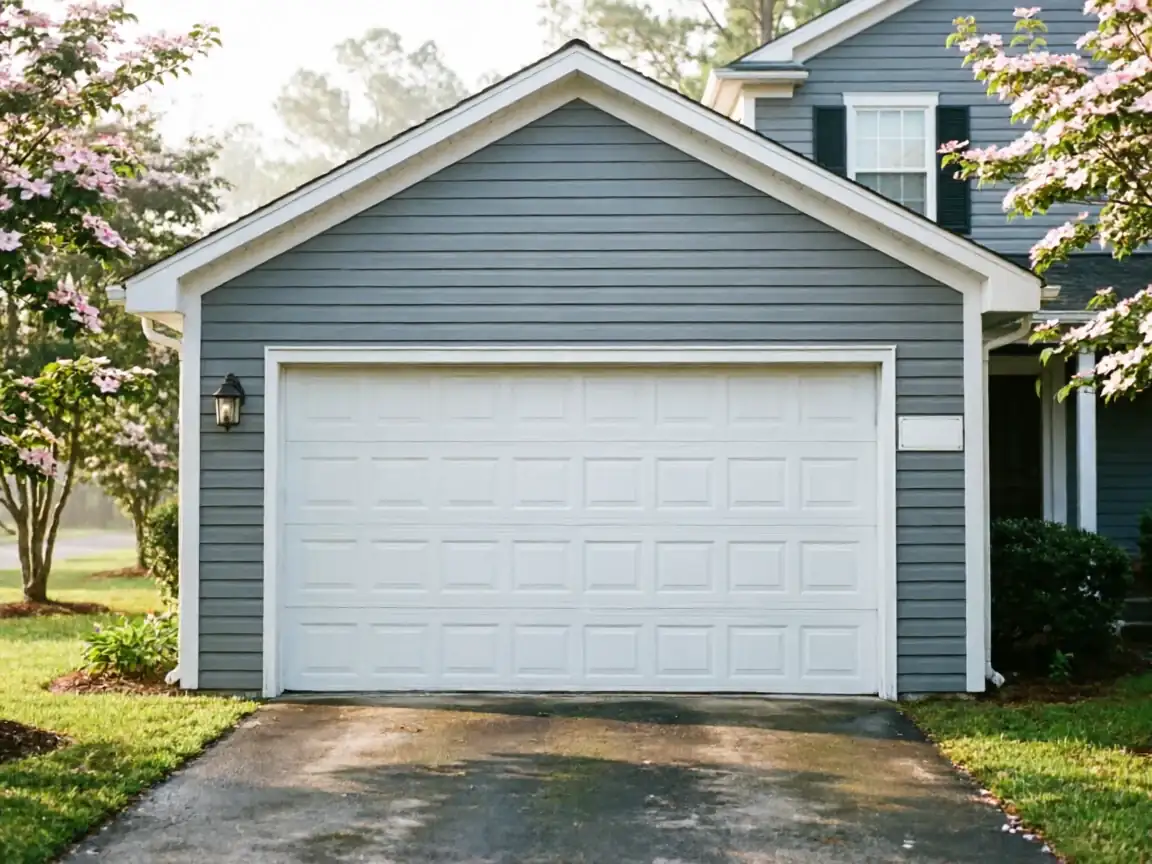
Most of what we see is tied to a median build year of 1992 for this town
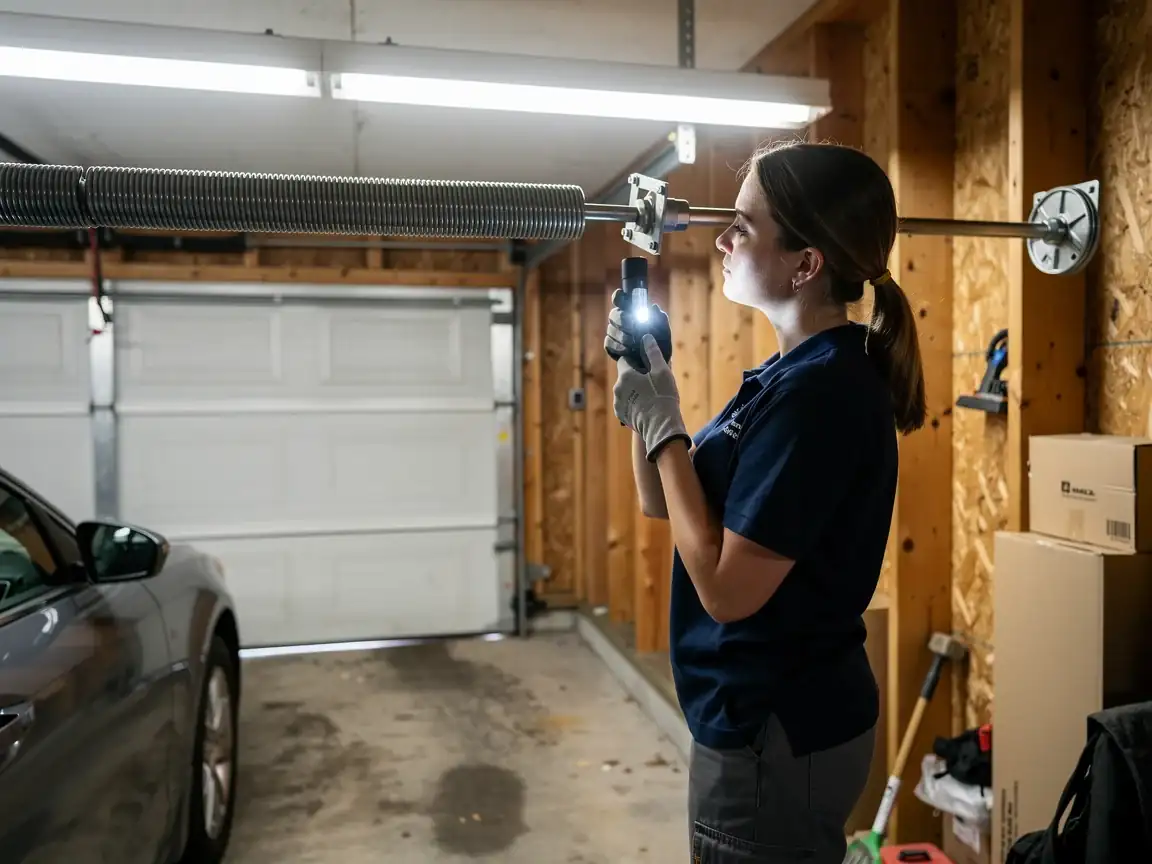
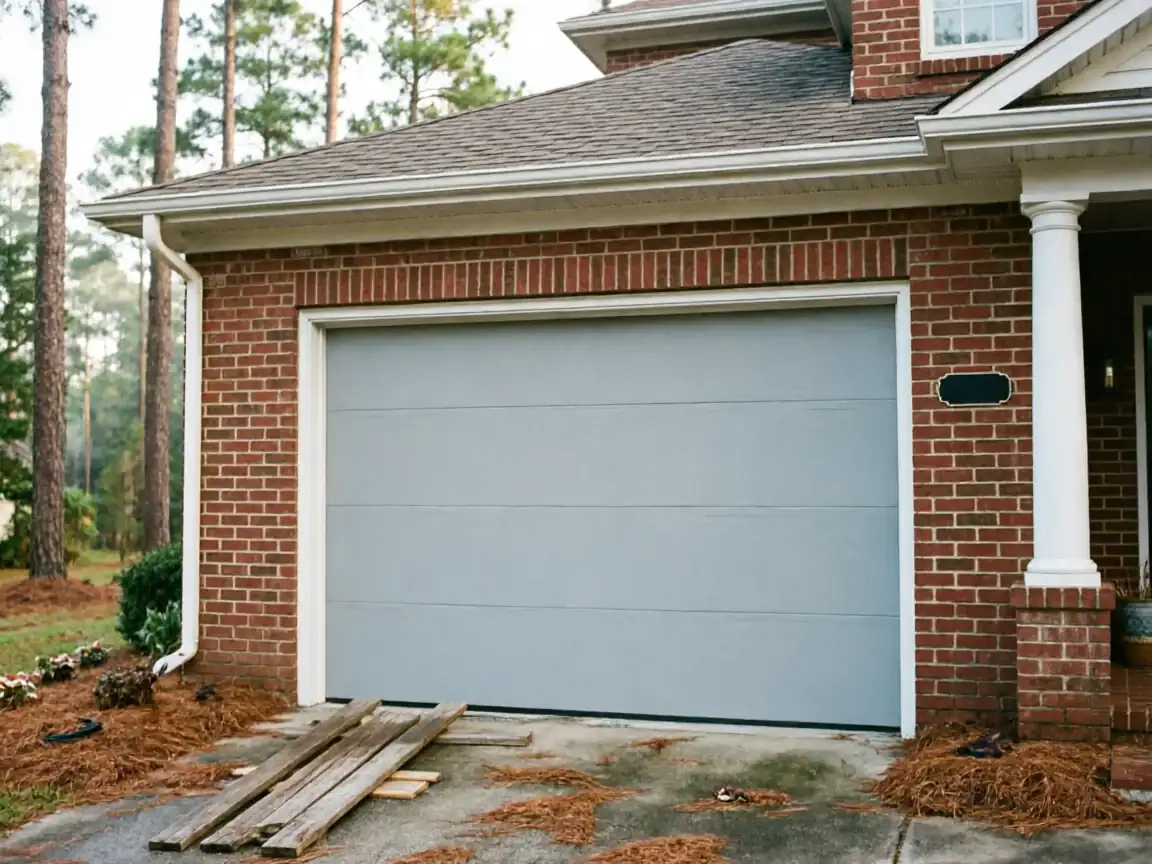
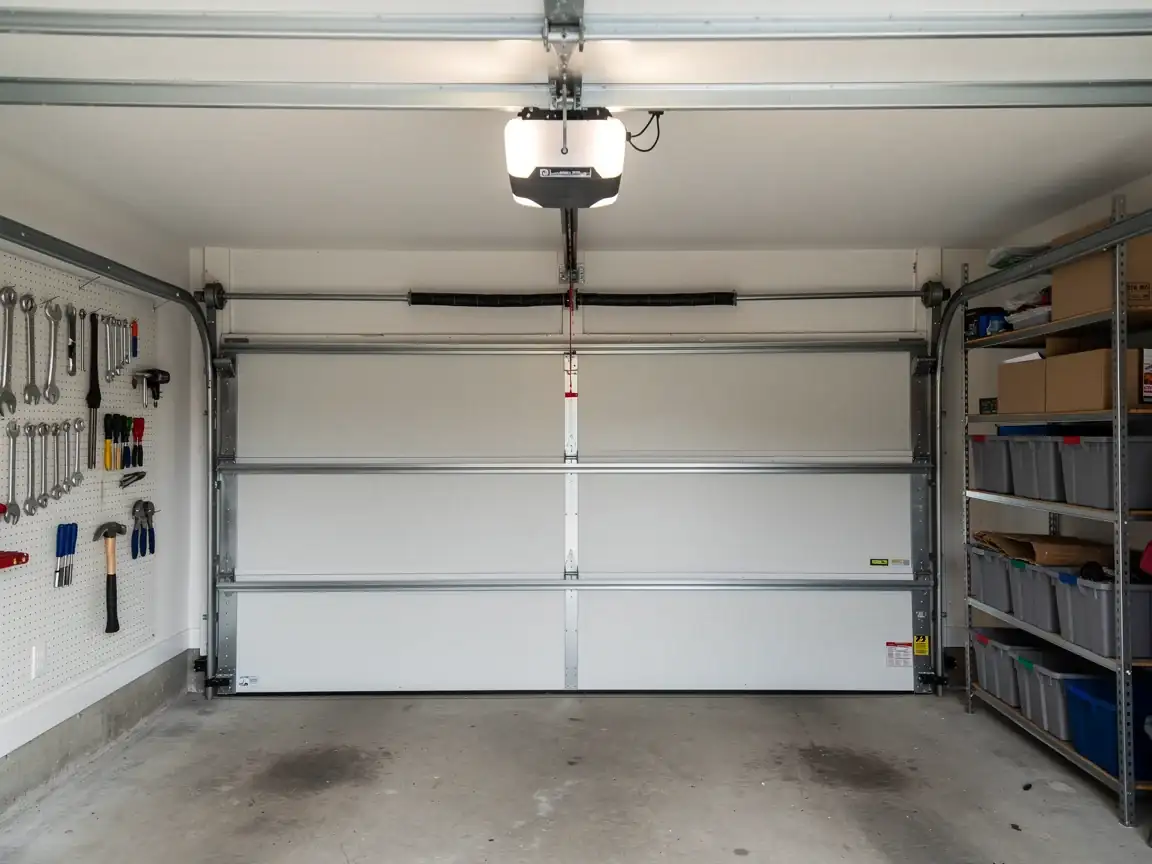
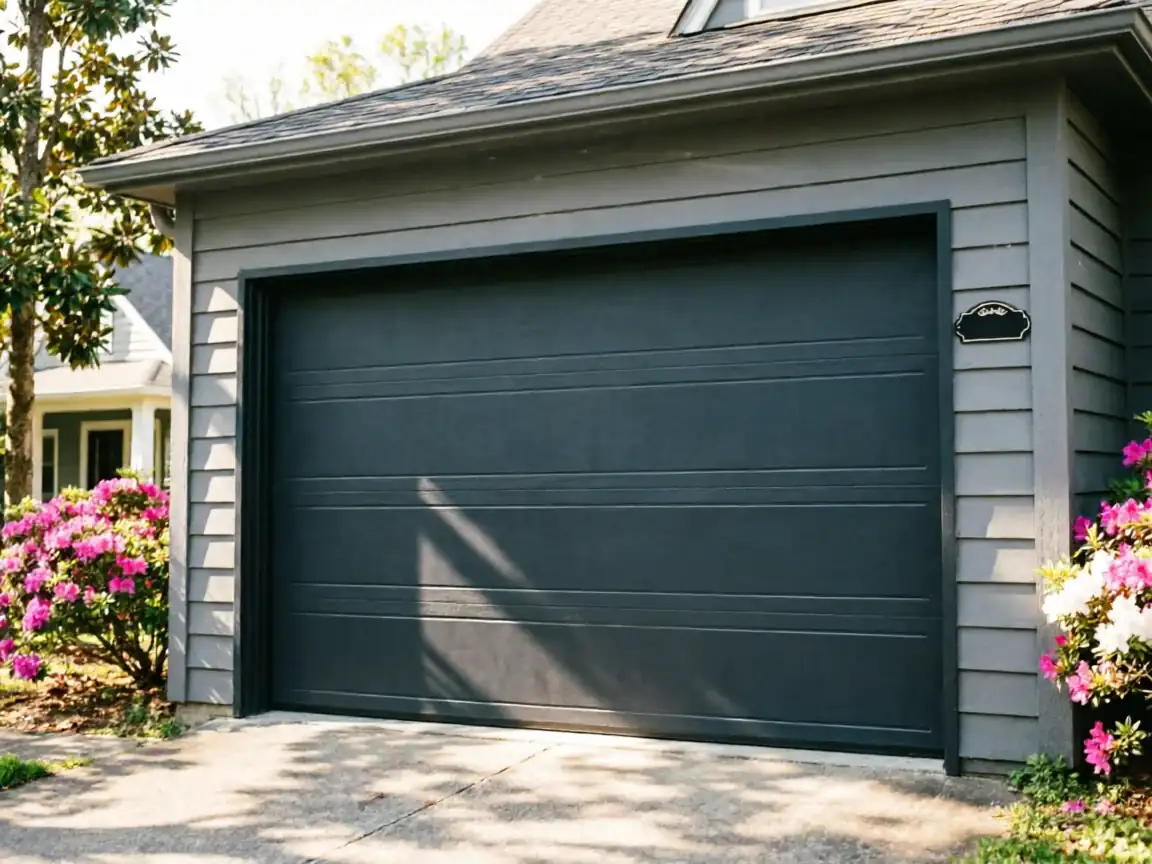
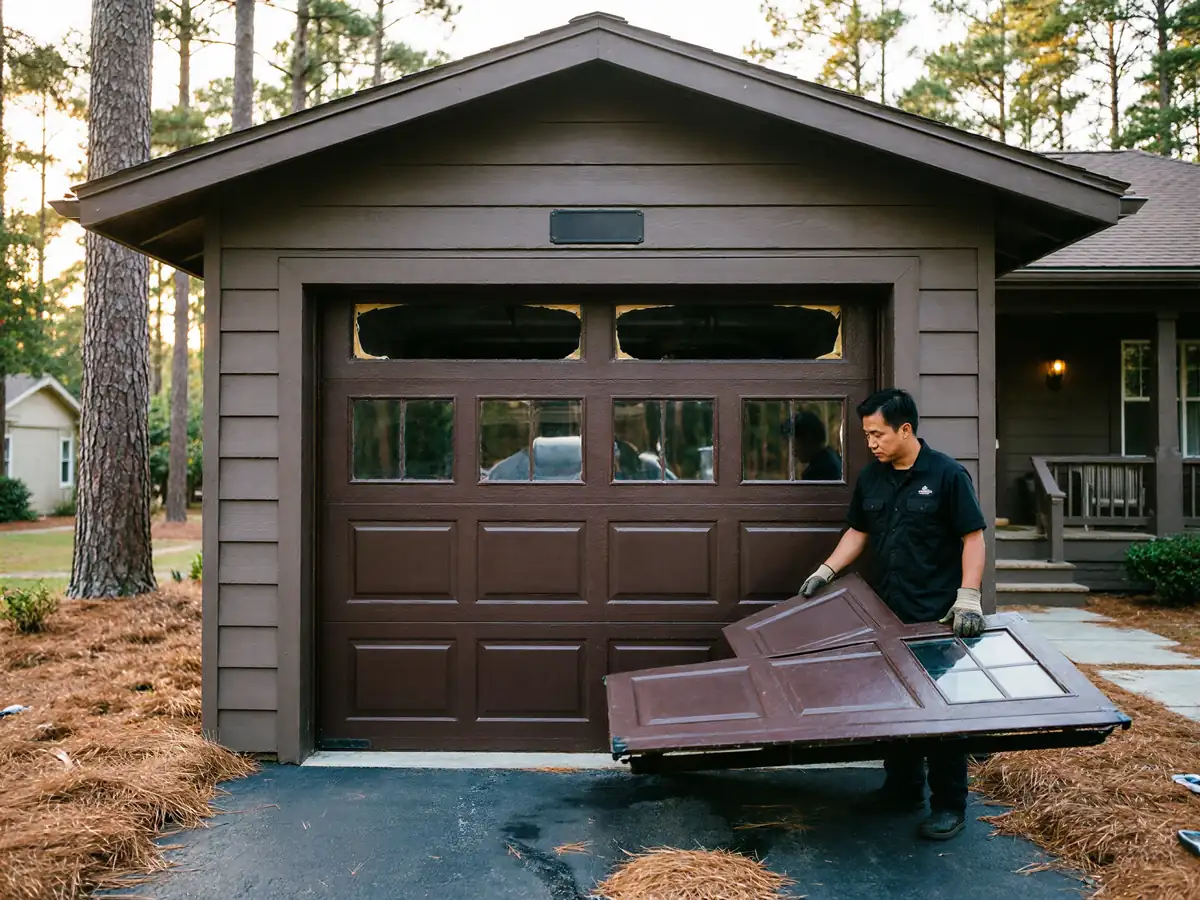
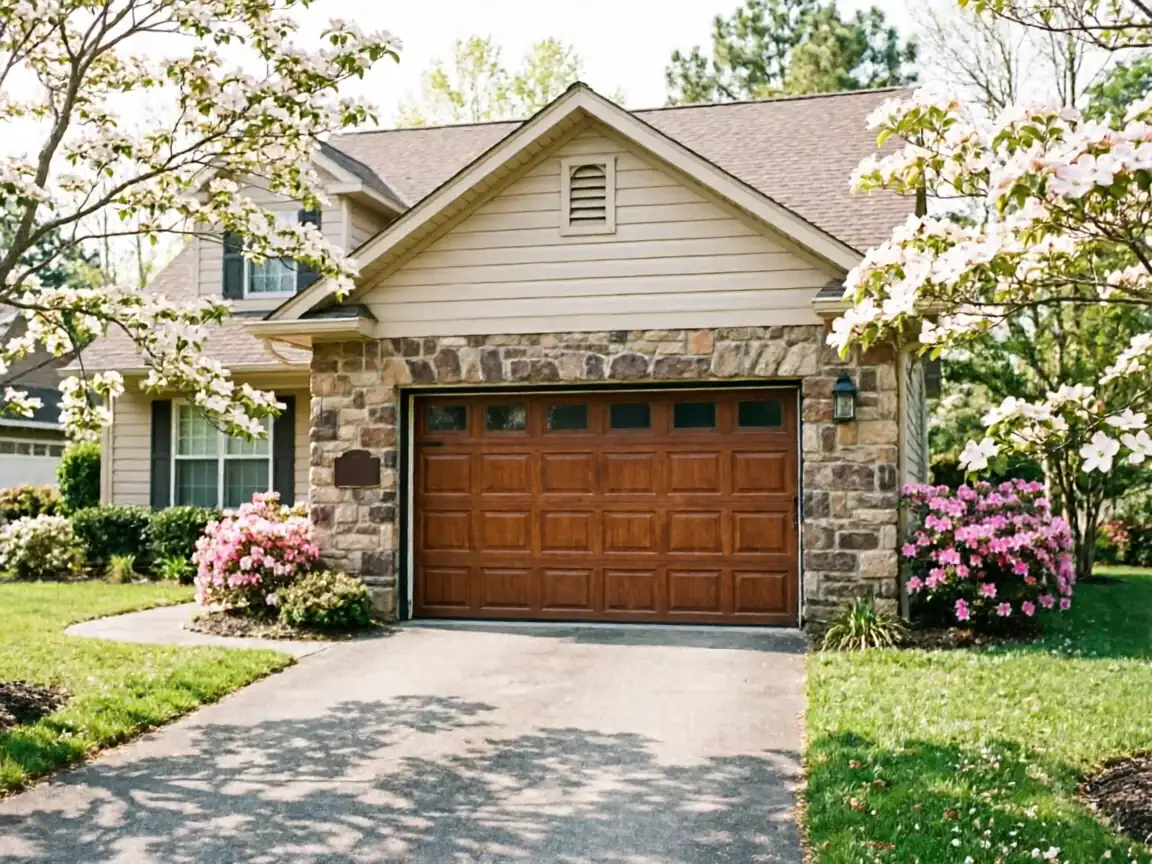
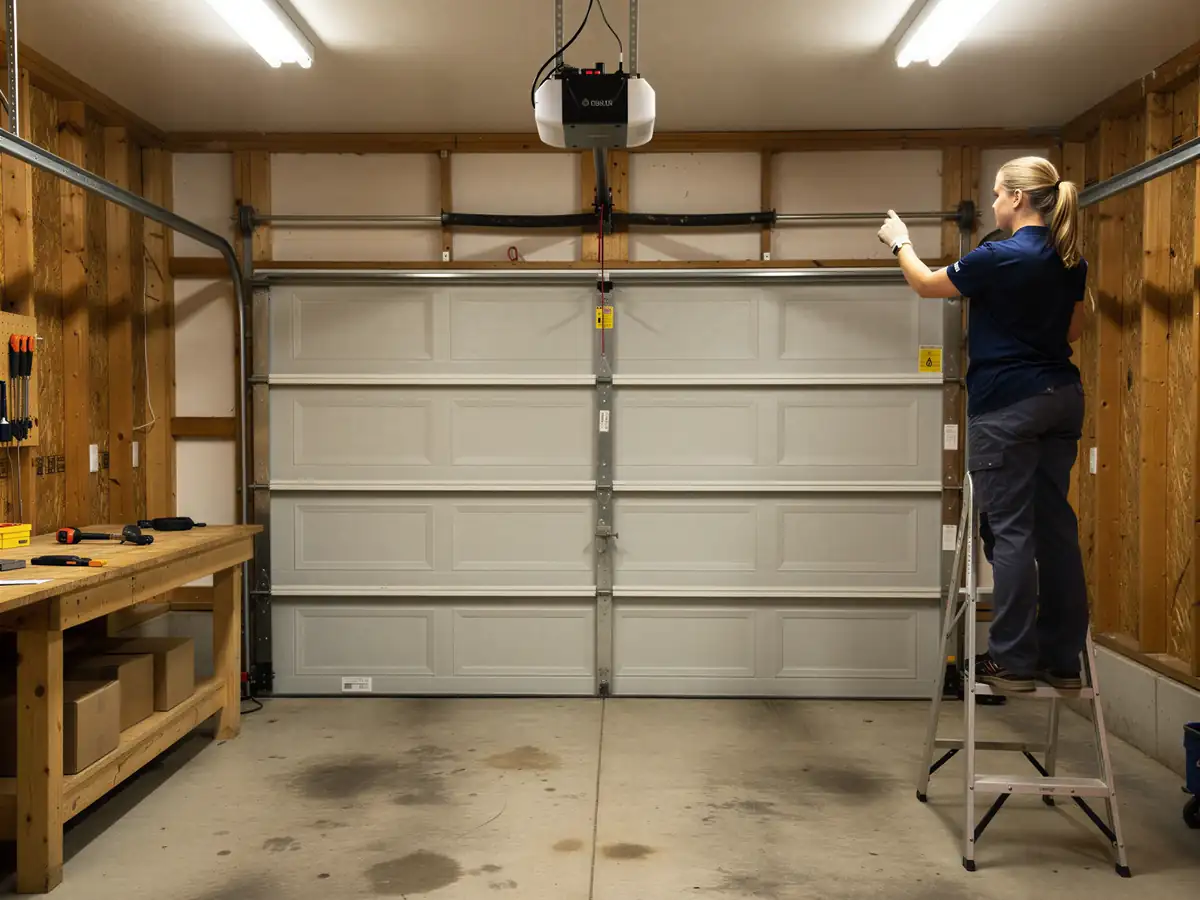
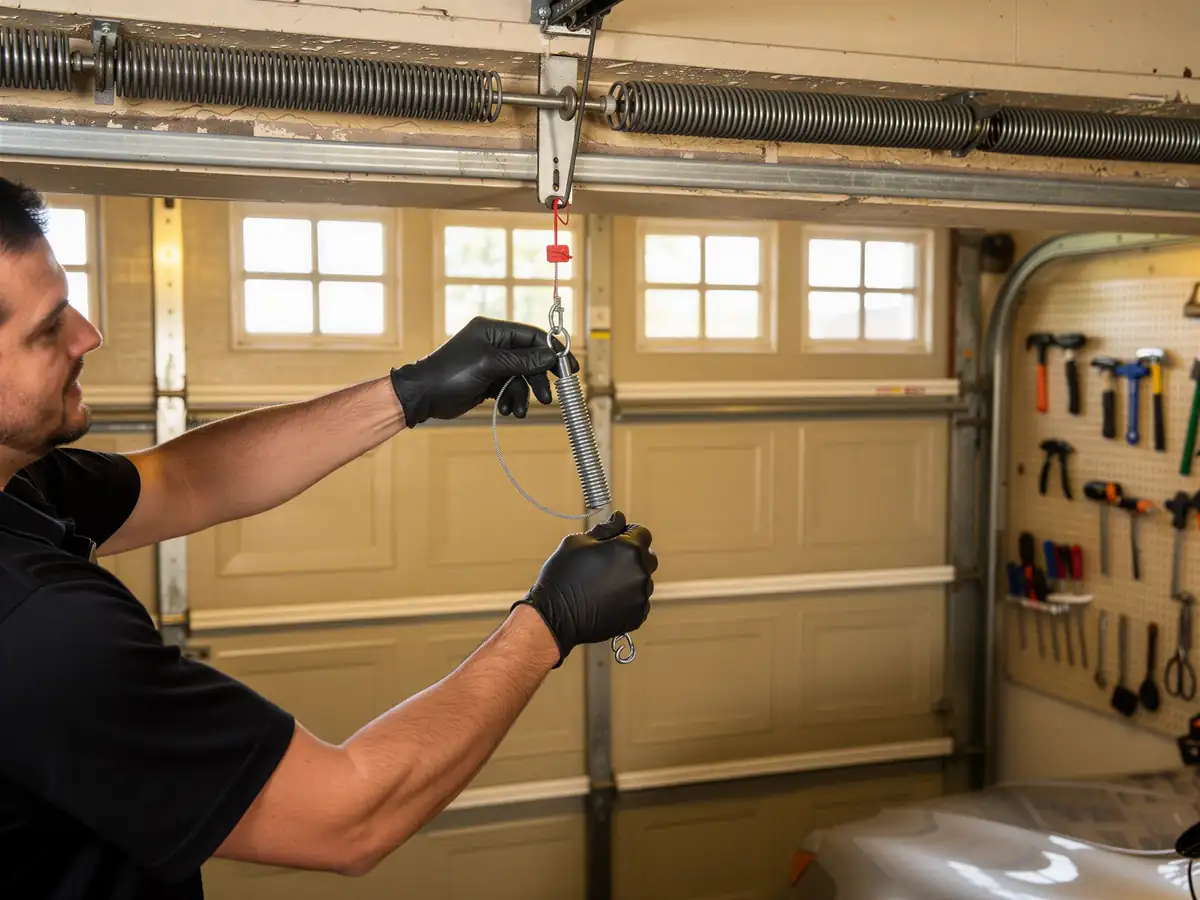
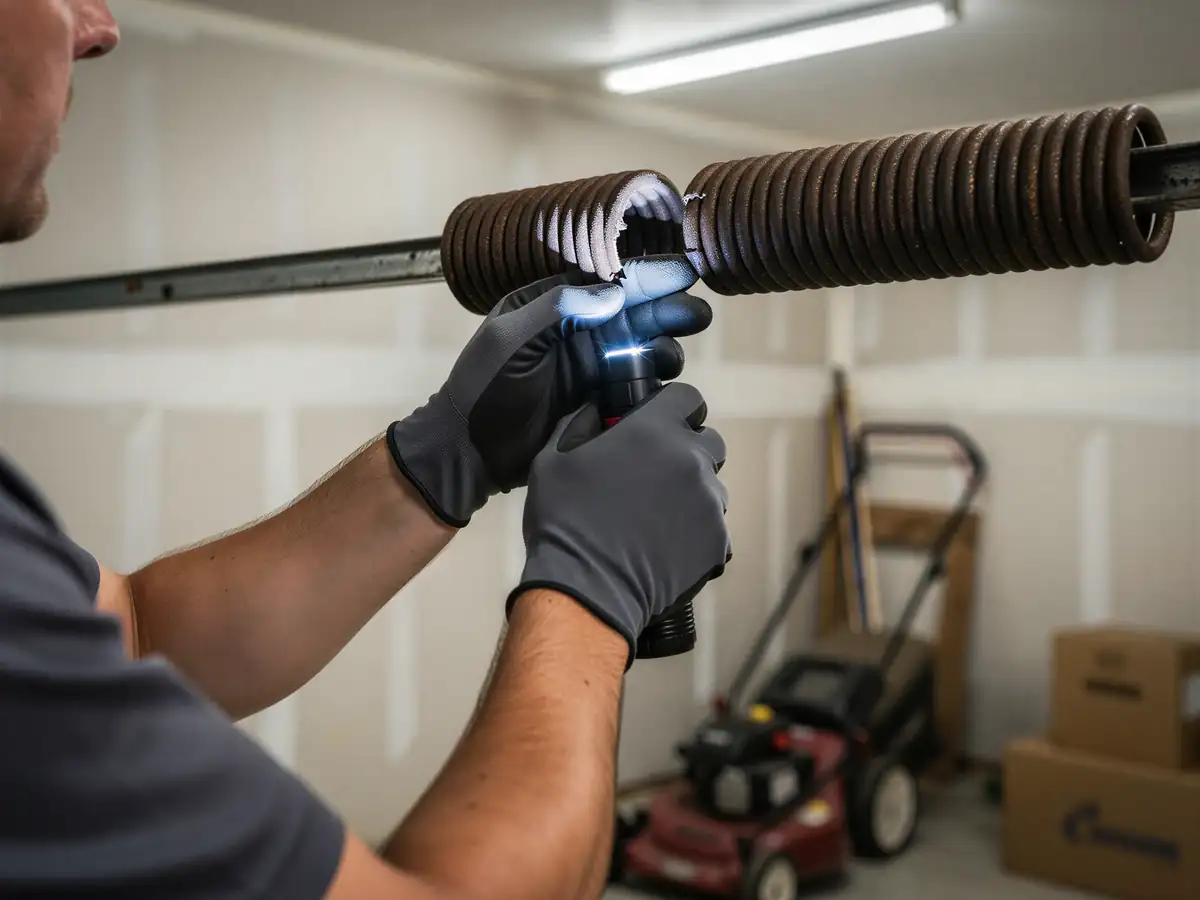
Later than a lot of the stock we cover from Hampton. That puts a good share of Smithfield garages on steel sectional doors with either extension springs in overhead brackets or early torsion setups, paired with chain-drive openers from the 1990s that are now past their reasonable service life. The symptom that brings people to the phone is usually the same: the door won't open past a foot, or it opens but the opener strains and groans doing it. That's a spring losing tension, not a broken opener, even though the opener gets blamed first.
A door that slams down the last six inches, rather than lowering evenly
Is telling you the same thing from the other end - the spring isn't carrying its share of the weight anymore.
Doing It Yourself
A torsion spring on a door this size is under enough tension to break a wrist or worse if it lets go while you're working on it. We're not going to walk you through replacing one. That's not us being precious about the job - it's the one piece of this work where a mistake doesn't mean a redo, it means an ER visit.
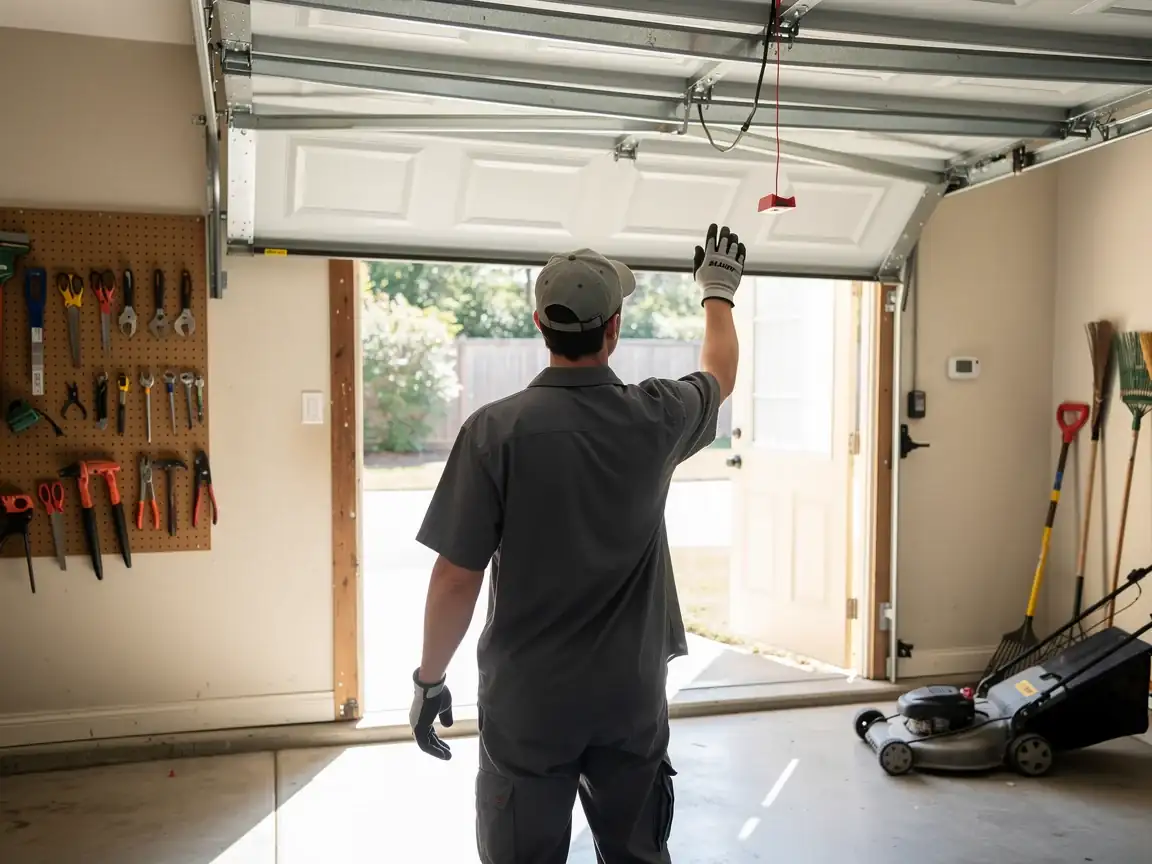
What you can reasonably check yourself: the photo-eye sensors near the floor on each track, which get knocked out of alignment by a stray bike or a bumped ladder more often than people expect. A blinking opener light with no motion usually traces back to one of those two sensors not lining up with its pair. You can also pull the manual release cord and lift the door by hand to get a feel for whether it's actually balanced - a properly tensioned door should hold at waist height on its own. If it drops or flies up, the spring is off and that's a call, not a project.
Lubricating hinges and rollers with a garage-door-specific lube, not WD-40, is fair game too, and it's cheap insurance against noise complaints from whoever's in the room above the garage.
Where This Job Goes Sideways
Houses built around 1992 in Smithfield are old enough now that the opener is usually the second failure on a service call, not the first. We'll get there for a spring, and find a logic board or a drive gear that's also on its way out. Replacing both at once is more honest than fixing the spring and leaving a customer to call back in three months for the opener.
The other place this goes sideways is parts availability on anything original to a 1990s build. Extension spring kits and the brackets that hold them aren't all stocked the same way torsion hardware is, and if your door is still running its factory setup, there can be a short wait on the exact match. We'll tell you up front if that's the case rather than guess at a timeline.
We should say plainly: we don't stock parts in Smithfield. Every job here is a truck coming 18 miles from Hampton, so same-day isn't something we promise sight unseen - we schedule it once we know what's actually wrong with the door, usually from a phone description or a photo of the spring and track.
How Long It Takes
Most spring and opener repairs run under two hours once the truck is on site
Which is the easy part. The variable in Smithfield is the drive - at 18 miles from Hampton, getting here adds real time to the front end of the job compared to a call closer in, and we build that into when we tell you to expect us.
- 18 miles
If the door needs a part that isn't a common stock item
Particularly extension spring hardware matched to an older sectional door, the wait is on the part, not the drive. We'd rather tell you two days up front than promise same-day and miss it.
For straightforward calls
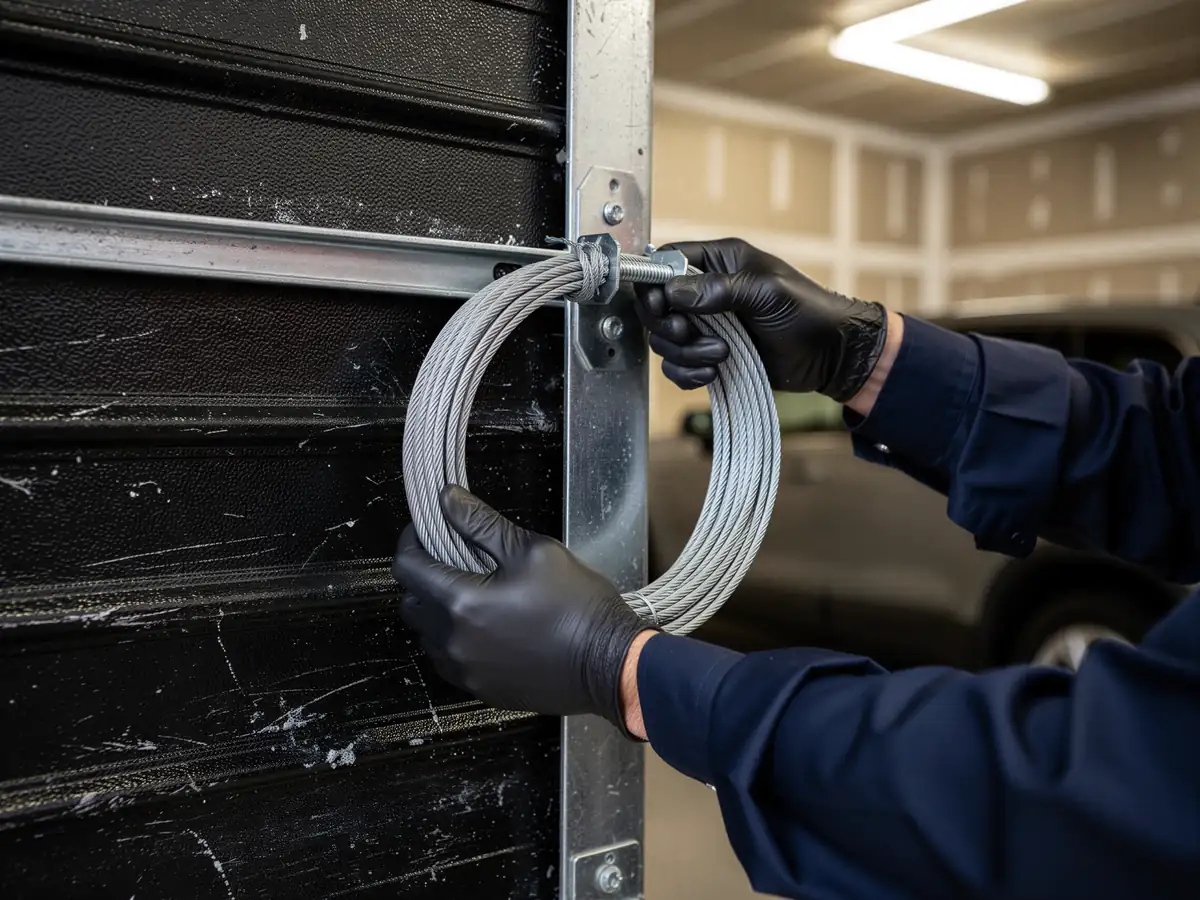
A broken torsion spring, a dead photo eye, a slipped cable - the actual repair window is short. It's the scheduling around the trip out that tends to be the honest answer to "how long," more than the wrench time itself.