Doing It Yourself
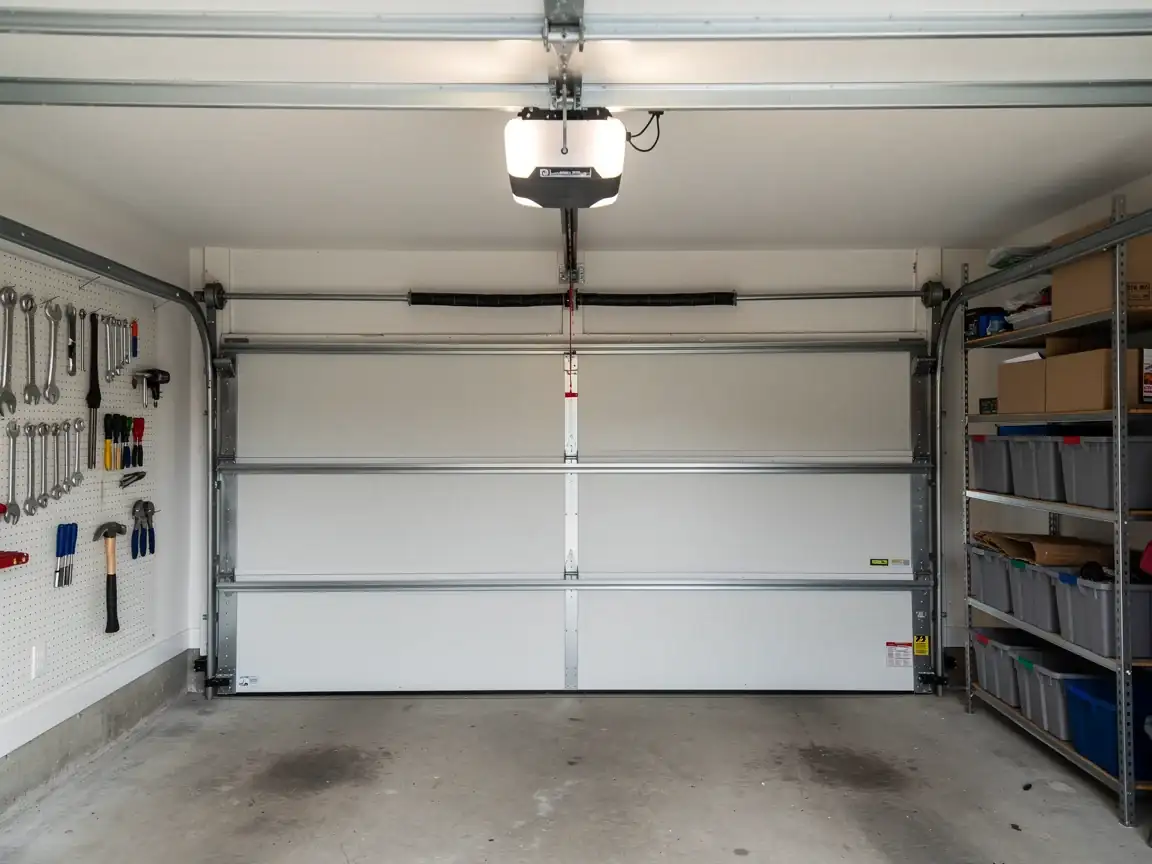
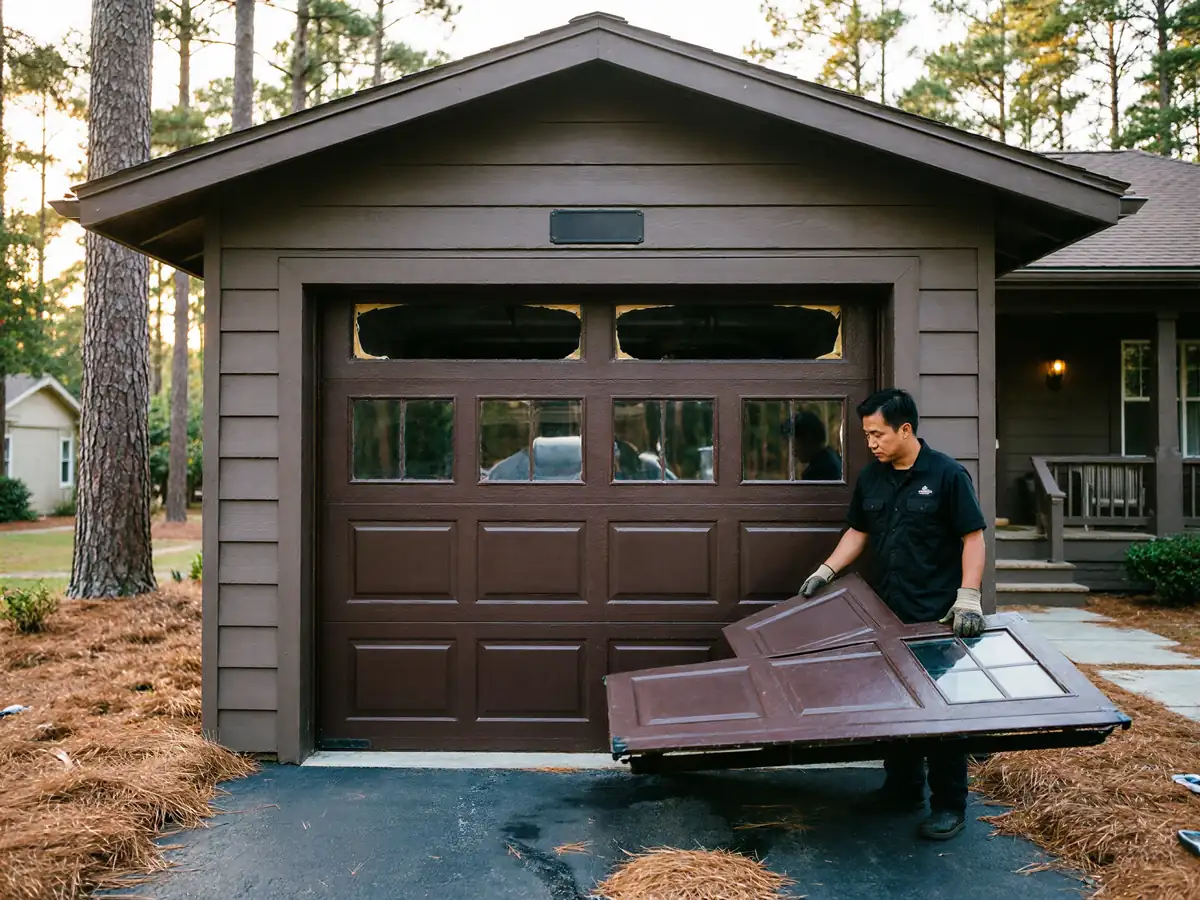
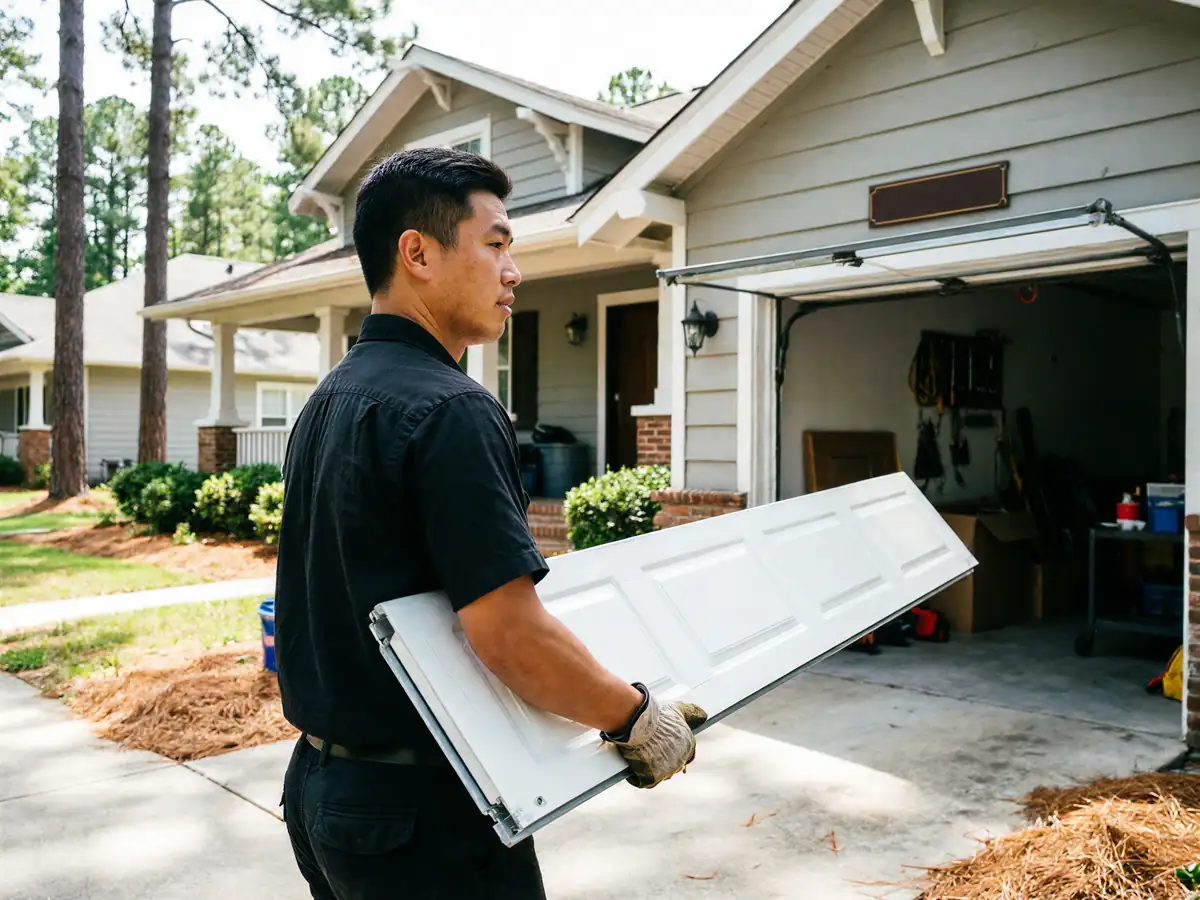
If you're set on handling this yourself, matching panel to door matters more than most DIY guides let on. Doors built around the early-to-mid 1990s standard use specific panel heights and rail spacing by manufacturer and model, and a panel that's close but not exact will throw off the track alignment on the whole section. You'll need the door's model number, usually on a sticker inside the top section or on the end stile, before you order anything. Measure twice: panel width, height, and the hinge spacing against what you're replacing. Lifting a steel panel section alone is awkward but doable for a single person on a single-car door; it gets harder fast on a double door with insulated panels, which weigh more per section. The part most people get wrong is the hardware - hinges and rollers from a panel swap don't always transfer cleanly to a new panel, especially if the old one is bowed, and forcing a bent hinge back on puts the new panel under stress from day one. If your door predates the mid-70s stock some neighborhoods nearby still have, don't assume parts will cross over; that's a different door entirely.
Where This Job Goes Sideways
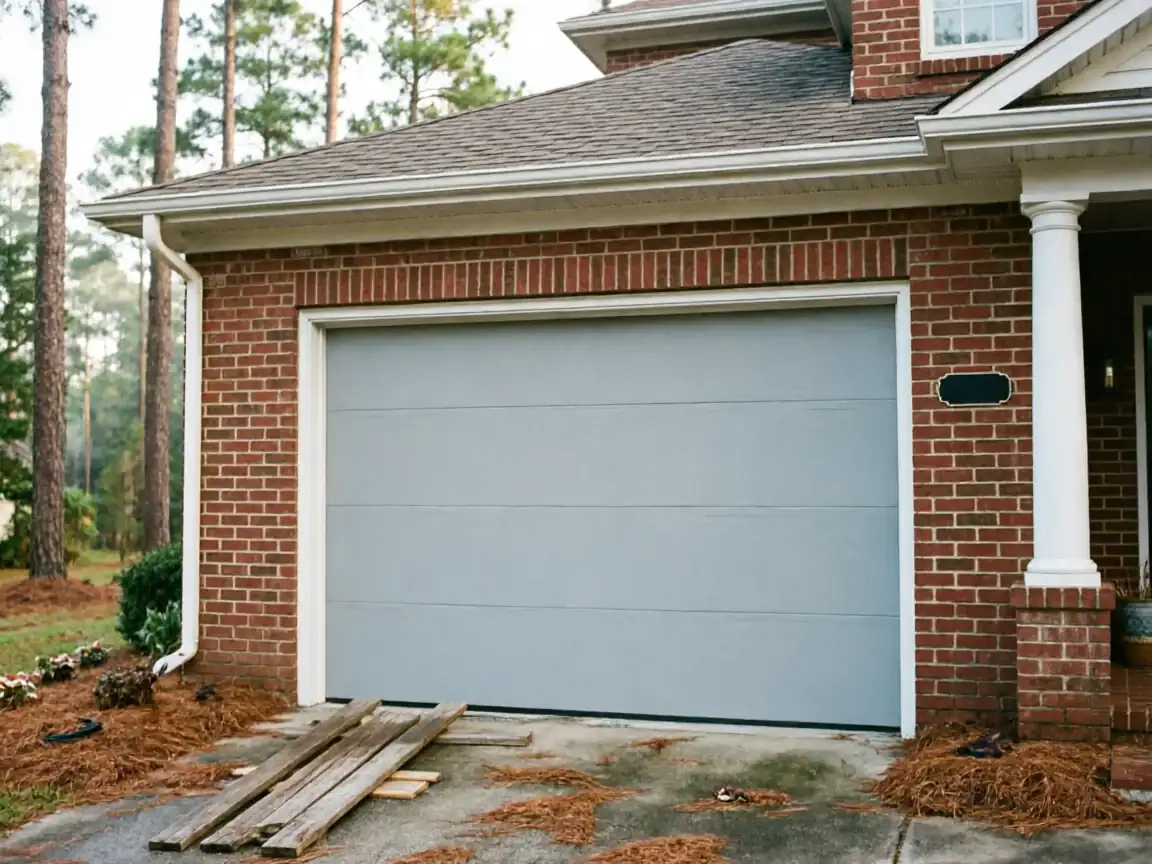
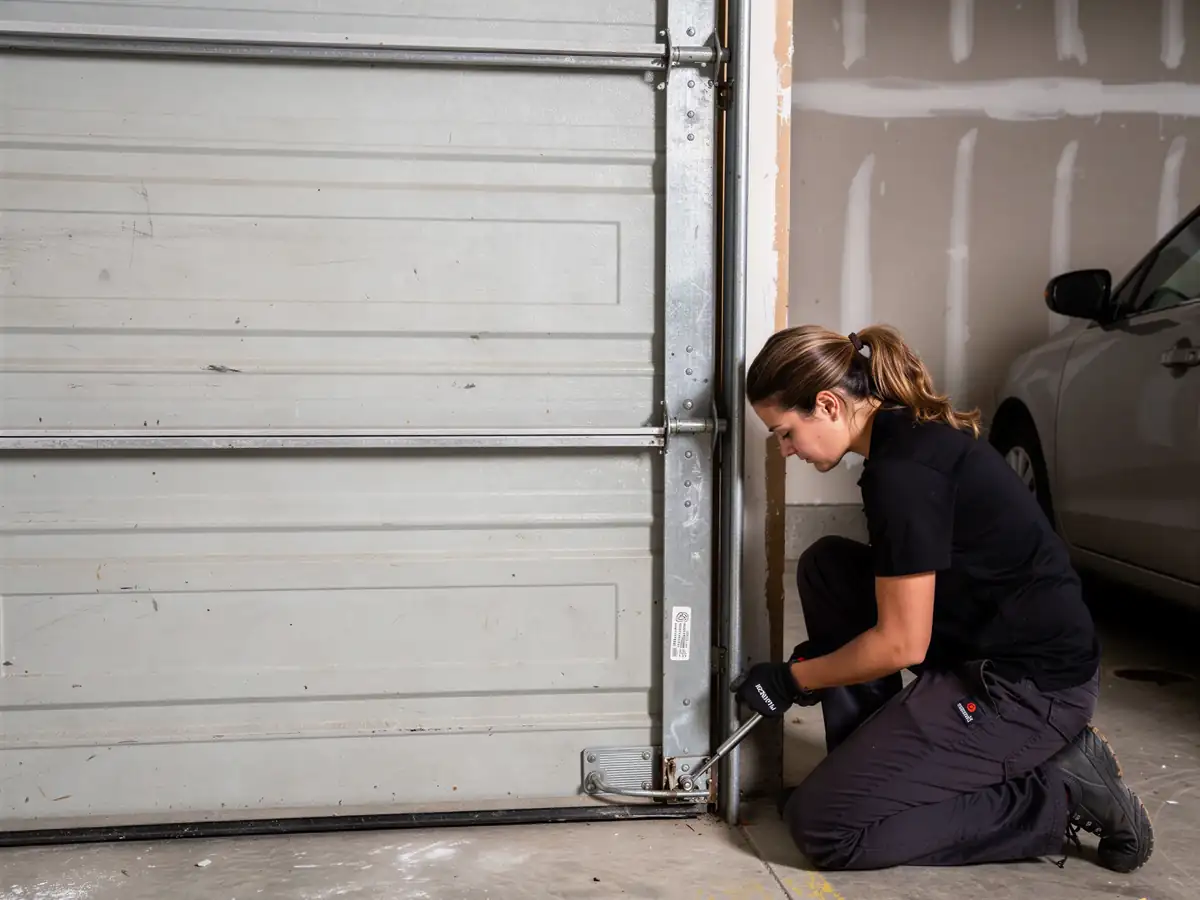
The failure mode we see most on panel jobs is a homeowner replacing the obvious dented panel and missing that the track below it is also bent. A dented panel often comes from an impact that also pushed the track inward a few degrees, and if you bolt a fresh panel onto a bent track, the door will bind or jump the rollers within a few weeks. The second place this goes wrong is color and texture match - panels ordered from a different supplier than the original door, even same brand, can come back a slightly different embossing pattern or a shade off from factory-weathered paint. We're honest that an exact match isn't always possible if the door is more than a few years old; sometimes the better call is replacing two matching panels instead of one, so the mismatch isn't staring at you every time you pull in. Third, fasteners: doors from the early 90s often used a slightly different gauge screw than current stock, and reusing the wrong screw can strip the panel skin on install. None of this is Smithfield-specific hardware, but it's the kind of mismatch that shows up more on a 30-year-old door than a 10-year-old one.