Doing It Yourself
Portsmouth's median household income runs $58,972
Well under the $90,885 median across the wider service area. That number matters before you touch a wrench. A new opener logic board or a full unit swap can eat two or three weeks of discretionary income fast, so a lot of Portsmouth owners want to know if they can fix the thing themselves first.
Some of it you can
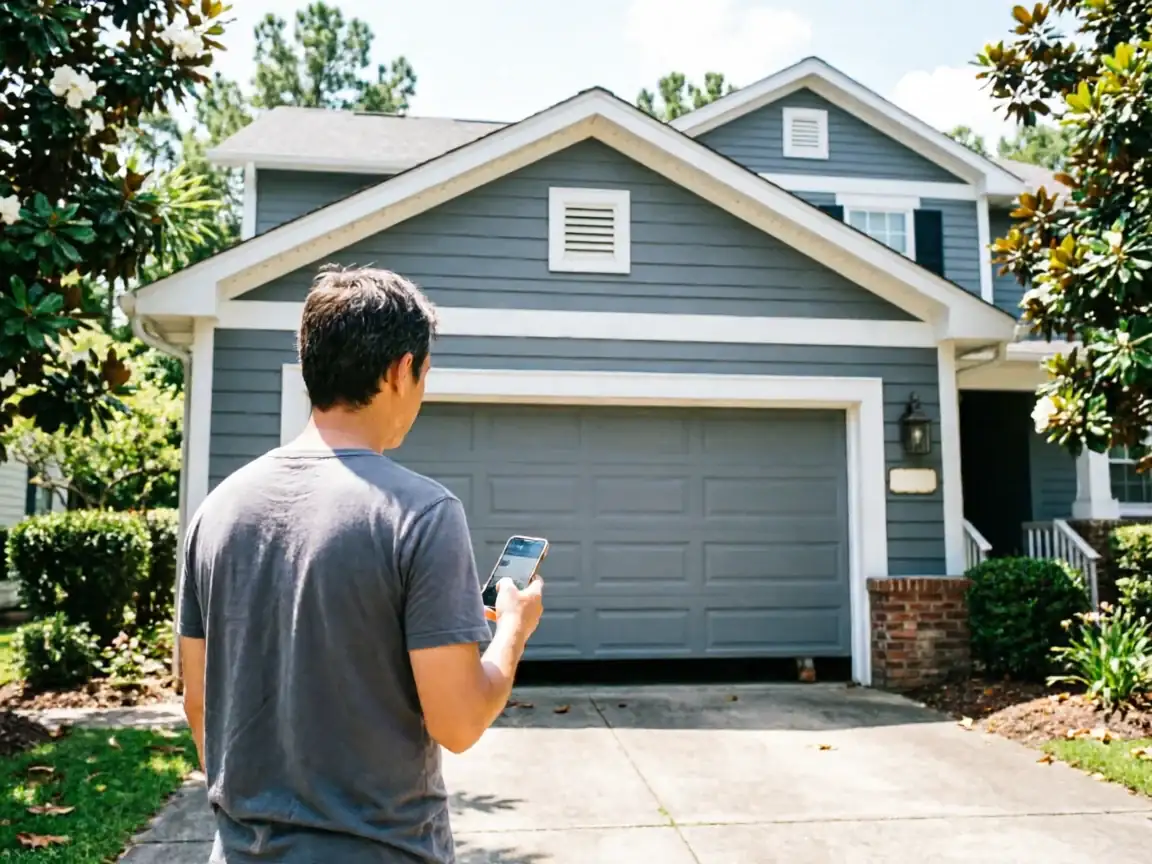
Reprogramming a remote, replacing a 9-volt backup battery, cleaning the photo-eye sensors so they stop blinking - fine, do it yourself, it costs nothing but time. What you shouldn't touch is the logic board itself or anything involving the high-voltage side of the unit. If the opener hums but the door doesn't move, or the wall button does nothing while the remote still works, that's wiring or a board fault, not a settings problem.
The honest math: if your opener is original to a house built around 1966 and it's the motor itself failing
Repair parts for that era of unit are getting hard to source. At that point a straight swap to a current opener usually costs less than hunting down obsolete parts, and it's the math we'll walk you through before we quote anything.
Why This Fails Locally
Portsmouth's housing stock centers on 1966, earlier than the 1977 median across the broader area we cover. That matters for openers specifically because the garages built in that window were sized and wired for chain-drive units from an era before safety reversal sensors were standard equipment. A lot of these homes have had one or two openers since, often installed without updating the wiring gauge or adding the photo-eye bracket properly.
We're 13 miles out from our Hampton shop to get to most of Portsmouth, which isn't far, but it means we're not showing up to peek at a blinking light - we come prepared for what a 1966-era garage actually throws at us: undersized electrical runs, missing ground wires, and brackets mounted for a sensor pair that's since been replaced with a mismatched set.
At 39,678 households in Portsmouth, a good chunk of these garages are getting their second or third opener right now, not their first, which is a different repair than a brand-new install. The old mounting holes, the leftover travel limit settings from a previous unit, the wiring someone spliced in 1998 - all of it has to get sorted before a new opener will run right.
Parts We Carry
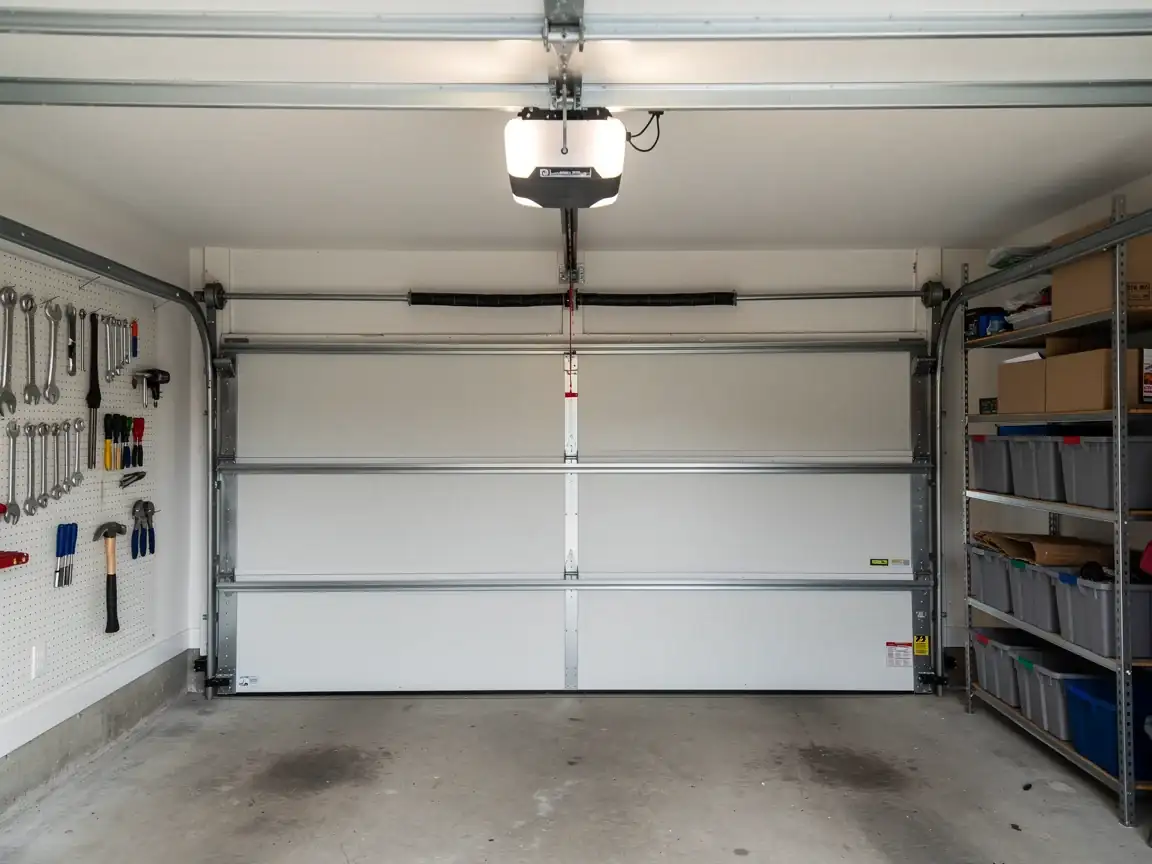
For the opener itself, we carry logic boards, drive gears, capacitors, and belt and chain drive assemblies that fit the openers most common in houses from the 1966 build era onward - the units that replaced original chain drives in Portsmouth garages over the decades since. We also stock photo-eye sensor pairs and wall control stations, since those are the two parts that fail most on openers installed as second or third units in older garages.
We don't stock every obsolete motor casting from every manufacturer going back to the 1970s. If your opener is a true original unit from that era and the motor itself has failed, we'll tell you straight that sourcing the exact part isn't worth the wait or the cost, and a new opener is the better call. That's the one honest limitation here: we fix what's fixable with parts on the truck, and we say so when it isn't.
Given the region's cold winters, we also carry cold-rated lubricant and weatherproofed wiring connectors, since opener wiring run through an unheated garage takes a different kind of wear here than it would somewhere milder.
Where This Job Goes Sideways
The call that starts as "opener won't close the door" on a Portsmouth job often isn't the opener at all
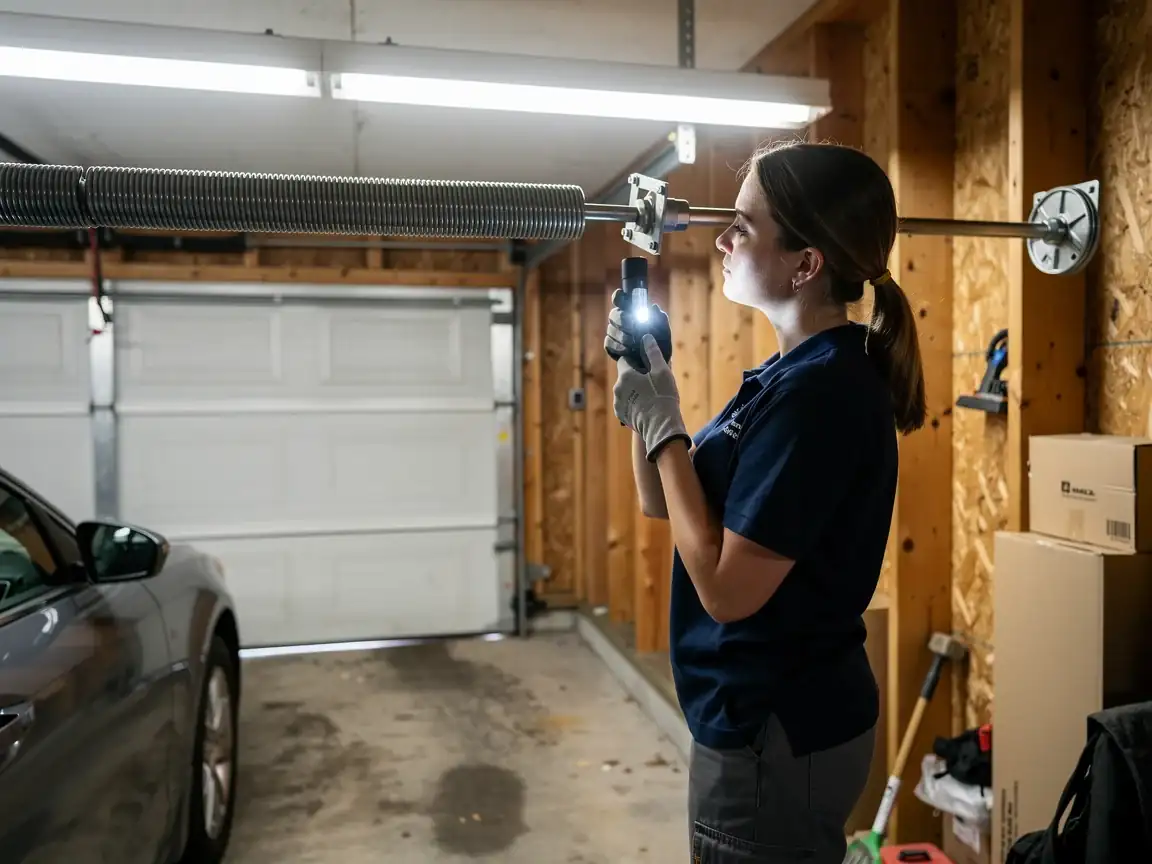
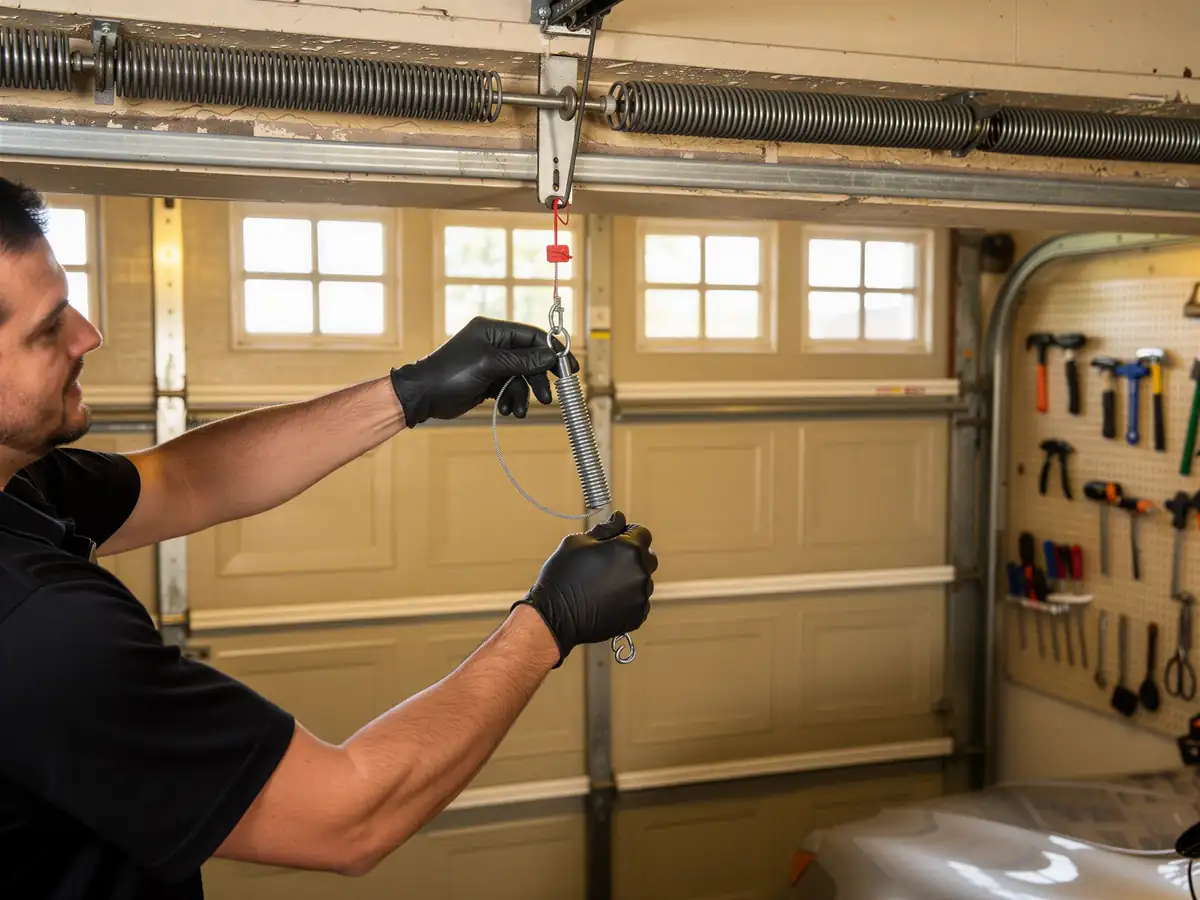
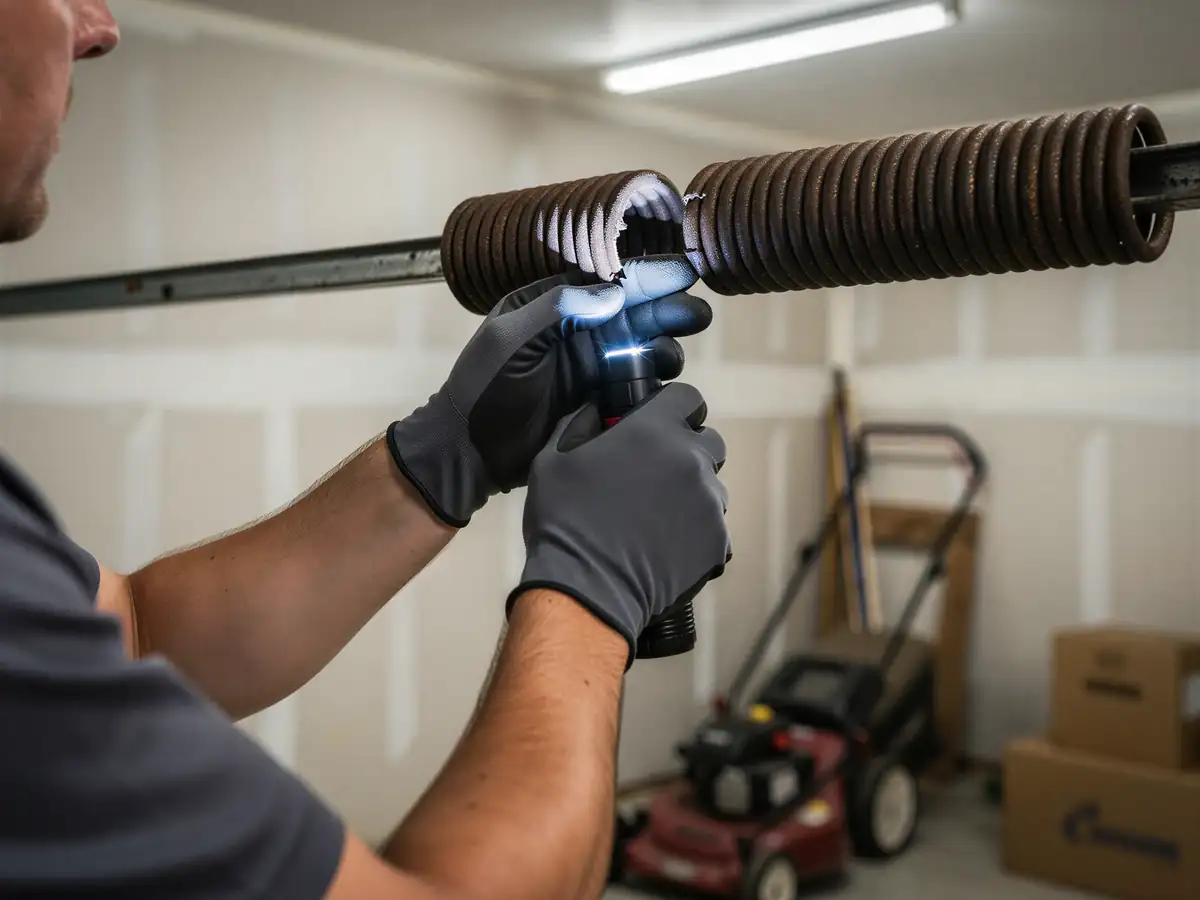
If the door is from the 1966-era original construction and the torsion spring has weakened over the decades, the opener motor can be straining against a door that's simply too heavy for it now. Swap the opener and the symptom comes right back inside a month.
The other sideways turn: travel limit settings
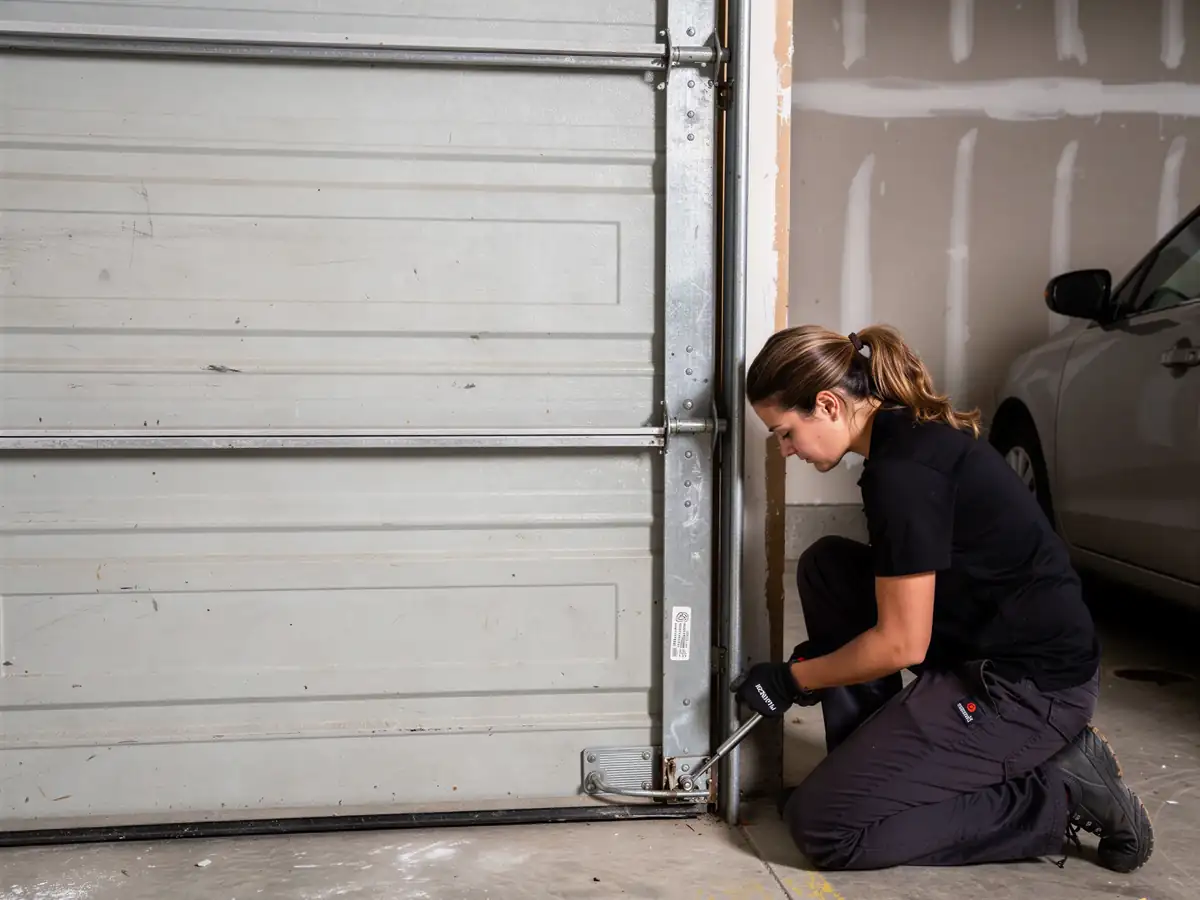
On a lot of these homes, a previous owner or a previous installer set the down-limit too aggressive to compensate for a door that was already dragging on worn rollers or a bent track. Replace the opener without fixing the rollers and track first, and the new unit inherits the same fight the old one was losing.
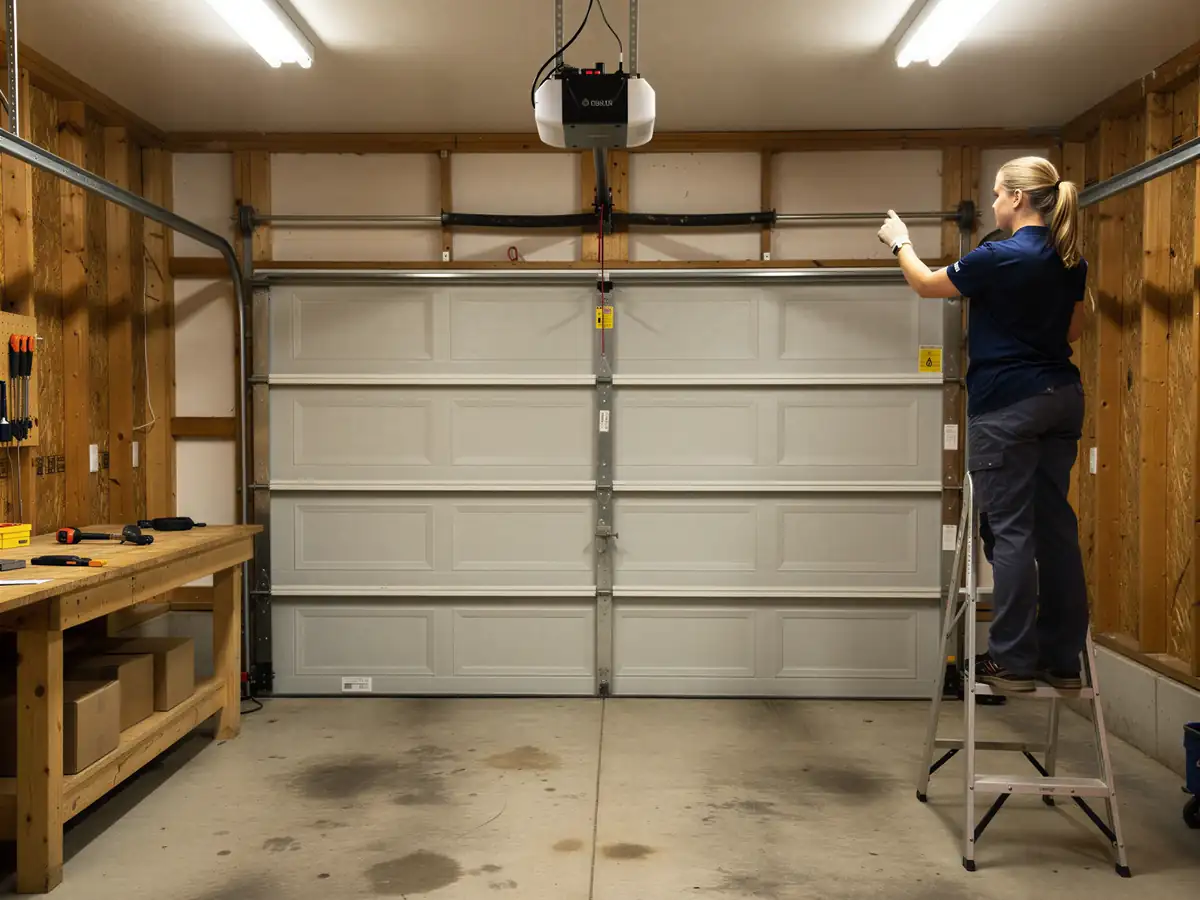
We check the door's balance and hardware before we quote an opener repair here, not after
It adds ten minutes to the visit, but it's the difference between fixing the actual problem and replacing the loudest symptom of it.
The Symptom
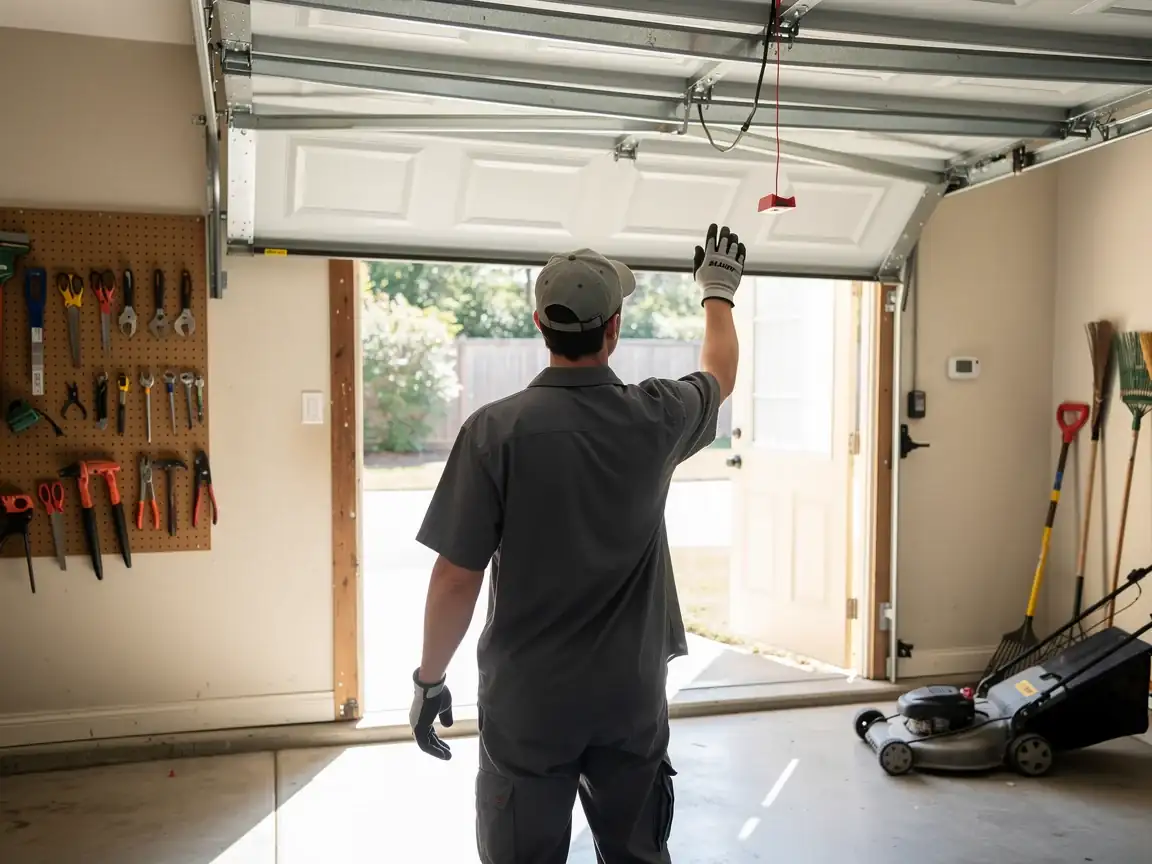
The most common call from Portsmouth: the opener runs, the light comes on, but the door doesn't move, or it moves a few inches and reverses. On a garage dating to the 1966 build era, that's almost always one of two things - a stripped drive gear inside the opener housing (plastic gear, wears out, cheap part, straightforward fix) or a door that's heavier than the opener can lift because of a tired torsion spring.
Second most common: the remote works intermittently, or only from inside the car with the door window down. That's usually a weak antenna wire inside the opener housing, a part that's been nicked or crimped during a previous service visit. It's a five-minute fix once we're inside the unit.
Less common but not rare in this housing stock: the opener reverses the instant it touches the floor, which points to the photo-eye sensors being misaligned or the close-limit setting drifting. Given how many of these units are second or third installs on the same bracket holes, misalignment is common enough that we check it on every opener call in Portsmouth.