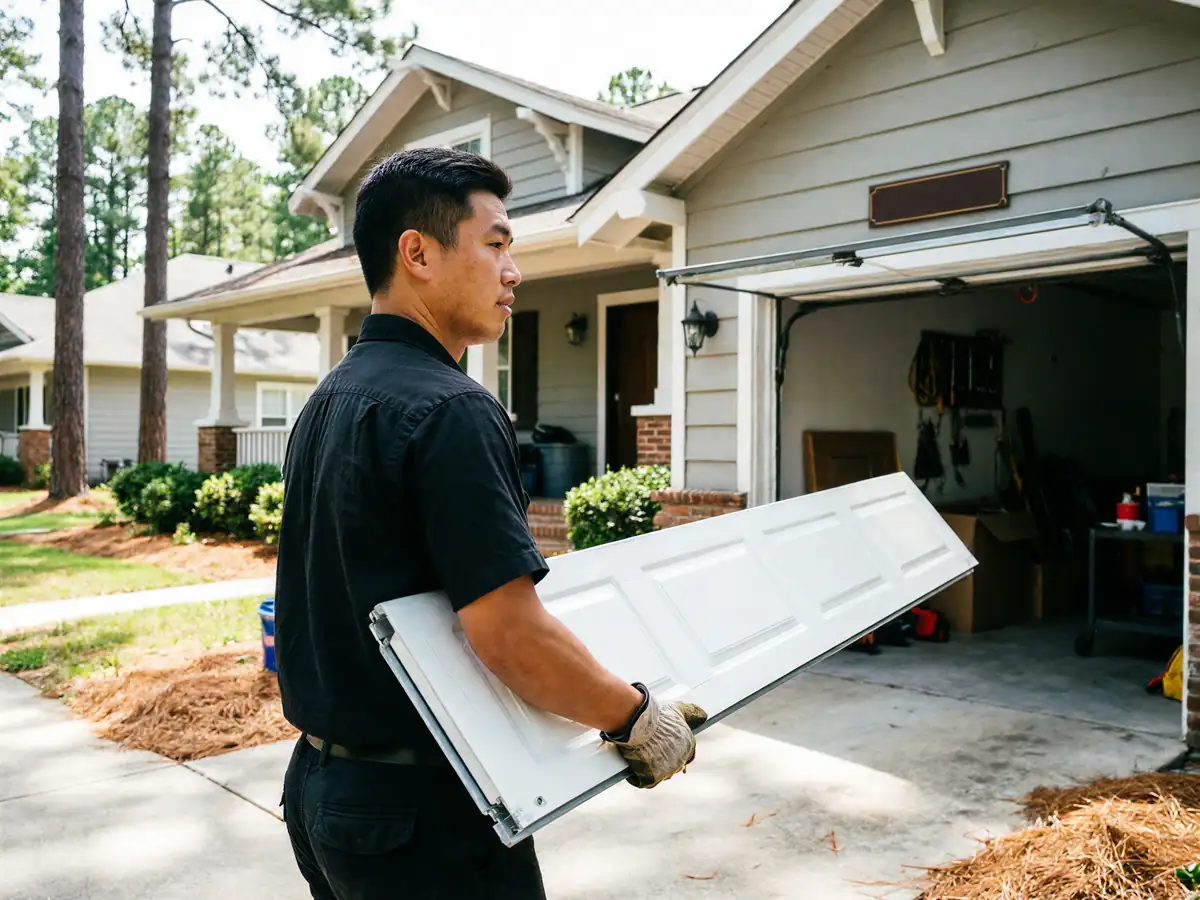
Doing It Yourself
Swapping a single garage door panel looks simple until you're standing in front of the door with the wrong part in your hand
On a lot of Portsmouth houses, the garage went up around 1966 - a decade or more before the median house in the wider coverage area, where the typical build year runs closer to 1977. That gap matters because panel height, section spacing, and hinge spacing weren't standardized the way they are now. A big-box panel kit sized for a 1980s door often doesn't bolt up clean to a mid-60s frame.
If you're set on doing it yourself
Measure the section height at both ends of the panel, not just the middle, since older tracks can rack slightly over decades. Check whether your hinges are the fixed-leaf type common on that era's steel doors - if so, you need matching leaf spacing, not just a panel that looks the same color.
We're not going to tell you it can't be done
Plenty of homeowners pull this off with patience and the right panel on hand. But if the panel is curved from a bump, or the track is bent along with it, a panel-only fix sometimes turns into a second job a month later. That's the honest limitation - we'd rather say that up front than have you buy a panel twice.
Why This Fails Locally
The reason panel swaps go wrong in Portsmouth more often than in newer parts of the coverage area comes down to the housing stock itself. Portsmouth sits inside the broader pattern of 1960s-70s construction that shows up across the service area's older named sections, but its own median build year - 1966 - runs noticeably ahead of the 1977 median for the area as a whole. A door built in 1966 was likely installed before embossed steel wood-grain panels became the standard profile, which means the raised-panel or flat-steel sections underneath are a different gauge and a different rib pattern than what ships in a current panel kit.
Add to that a median household income here of $58,972, well under the $90,885 seen across the wider coverage area, and the math changes too. A lot of these households are weighing a single panel against a full door, and the answer isn't the same for a 1966 door as it is for a newer one - the older frame may not be worth matching at all once you account for labor.
Parts We Carry
We stock steel panel sections in the common heights used across 1960s and 1970s builds, since that's what most of the doors we're called to replace actually have. That includes narrower raised-panel profiles that newer kits don't match, along with the fixed-leaf hinges and shorter struts that older sectional doors use.
What we don't carry on the truck is anything custom-milled - wood panels, odd widths, or discontinued manufacturer profiles that haven't been made in years. If your door falls into that category, we'll tell you straight that a full door replacement is the faster and often cheaper path, rather than hunting for a panel that may not exist anymore.
We travel the roughly 13 miles out from Hampton to handle these jobs, which means we bring what the house actually needs rather than guessing from a photo. Bring us the section height and panel count and we'll tell you before the truck rolls whether it's a panel we have or one we don't.
Where This Job Goes Sideways
The climate here sits in a cold-moderate band
Which over close to sixty years of freeze-thaw cycles does real work on steel panel seams and the fasteners holding them to the stiles. On a 1966 door, that's a long time for rust to creep into bolt holes that were already tight to begin with. We've seen panel bolts that won't back out without stripping, hinges seized to the point the panel has to be cut free rather than unbolted.
The other place this goes sideways is the track
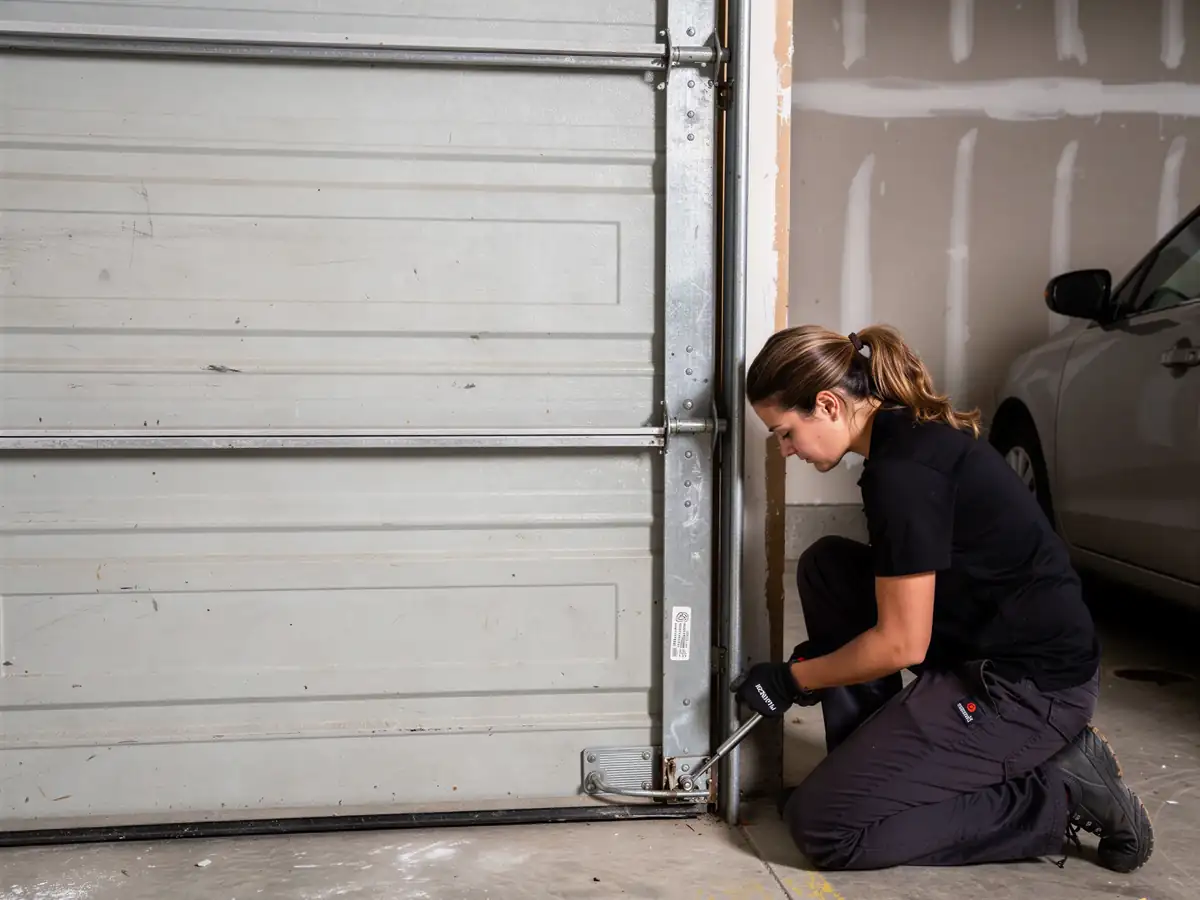
A panel swap assumes the rest of the door is square. On a door this age, decades of settling can leave the track slightly out of plumb, which a brand-new panel will not forgive - it'll bind on one side even though it's installed correctly. That's usually the point where a panel job becomes a track adjustment job too, and it's worth knowing that going in rather than being surprised by the invoice.
The Symptom
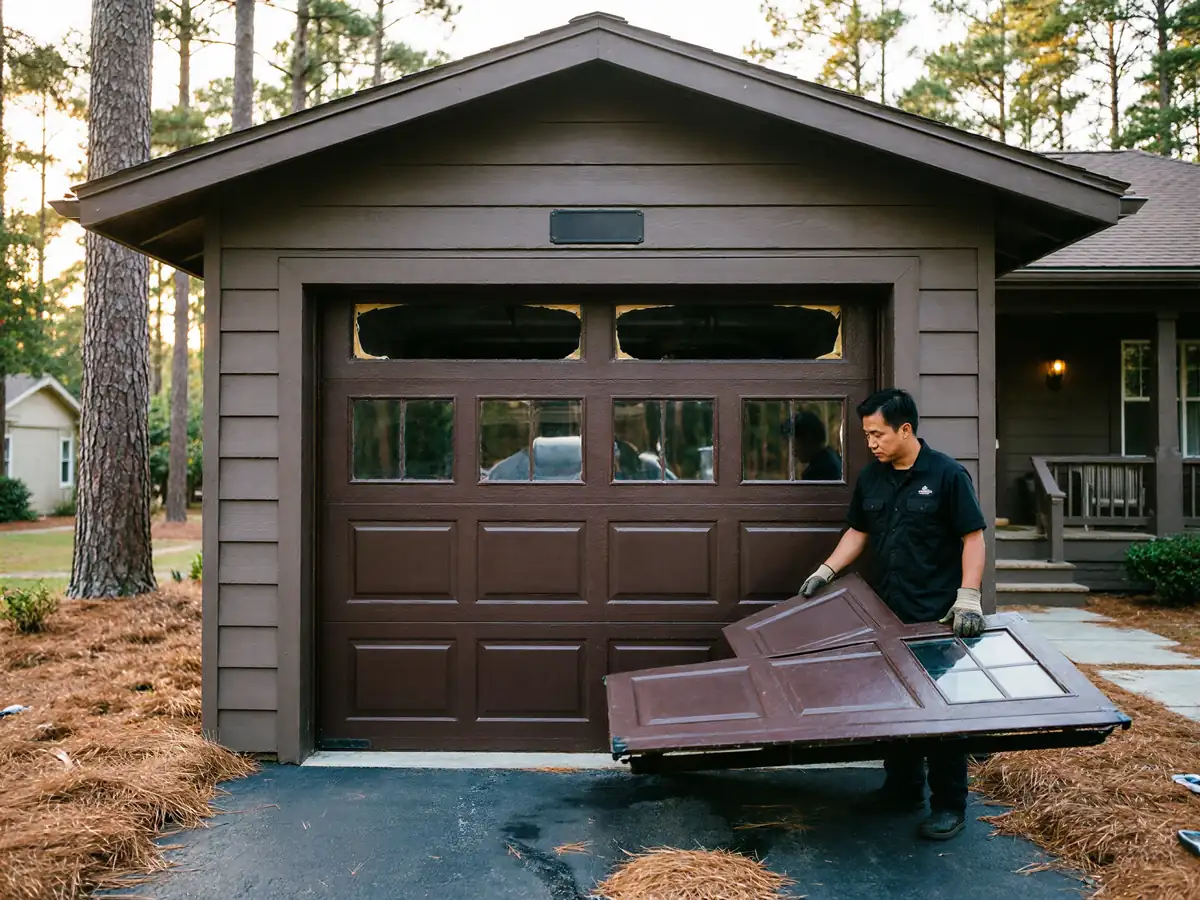
The giveaway is usually a dent or a crease across one section, sometimes from a trailer hitch backing in wrong, sometimes just from age and a panel that's gone soft at the seams. On a door from this era, the real tell is what happens next: cold air finds the crease. With the cold-moderate winters this area gets, a cracked or dented panel on an older steel door turns into a draft you can feel standing in the garage, not just a cosmetic dent.
If the crease runs along a horizontal seam rather than across the face, that's usually structural - the section has lost its rigidity, not just its looks, and it's a better candidate for replacement than for bondo and paint. If it's a single clean dent away from any seam or hinge point, a panel swap on its own is often enough, provided the rest of the door is still square. Either way, catching it before the panel rusts through at the crease saves you from the track-and-panel job described above.